


Almost every aquarium owner encounters algae at some point in their hobby, and seeing a film of green coating your tank glass can feel frustrating. While algae is a completely natural organism in wild waterways, an excessive bloom in a home tank can obstruct your view, smother delicate plants, and disrupt the visual harmony of your aquascape. Fortunately, resorting to harsh chemical treatments is rarely necessary and can often stress your aquatic pets. In this comprehensive guide, we will examine how to control algae in aquarium naturally, explaining root causes, natural biological balances, clean-up crews, manual cleaning methods, and practical weekly habits to restore crystal-clear water.
- Understanding What Causes Aquarium Algae Growth
- Lighting Management: Controlling the Primary Trigger
- Nutrient Control and Feeding Discipline
- Enlisting a Natural Algae Clean-Up Crew
- Safe Manual Cleaning Techniques Without Chemicals
- The Power of Live Plants in Outcompeting Algae
- Common Algae Control Mistakes and How to Avoid Them
- Frequently Asked Questions (FAQ)
Key Takeaways & Quick Reference
- The Primary Trigger: Unbalanced lighting (over 8 hours daily) combined with excess nutrients is the number one cause of algae.
- Lighting Timer: Set an automatic timer for 6 to 7 hours of daily lighting to eliminate light spikes.
- Natural Clean-Up Crew: Amano shrimp, Nerite snails, and Otocinclus catfish consume diatoms and green algae continuously.
- Maintenance: Pair lighting control with regular gravel vacuuming using our guide on cleaning a tank without removing fish.
Understanding What Causes Aquarium Algae Growth
Algae is an opportunistic plant-like organism. Just like living aquarium plants, algae requires three basic elements to grow and reproduce: light, water, and nutrients (primarily phosphates and nitrates). When your aquarium maintains a healthy biological balance, your live plants and beneficial bacteria absorb available nutrients, leaving very little fuel for algae.
However, whenever an imbalance occurs—such as leaving the lights on for too many hours or introducing excess fish food—algae quickly seizes the opportunity to flourish. Common types of nuisance algae include soft brown diatoms (frequent in newly established tanks), green dust algae on glass, green spot algae on ornaments, and stubborn black beard algae. Recognizing that algae is simply a biological symptom of an underlying nutrient or light surplus is the first step in learning how to control algae in aquarium naturally.
Lighting Management: Controlling the Primary Trigger
Lighting is the single most common driver of runaway algae in home aquariums. Many beginners mistakenly leave their tank lights switched on from the moment they wake up until bedtime, exposing the water to 12 to 14 hours of continuous bright light. In nature, tropical streams receive filtered sunlight for only a fraction of the day.
Here are essential lighting rules to suppress unwanted algae growth naturally:
- Limit Photoperiod to 6 to 8 Hours: Plants can absorb all the light energy they need within six to eight hours. Any light beyond that timeframe primarily fuels algae reproduction.
- Install an Inexpensive Timer: Human memory is inconsistent. A simple digital or mechanical plug-in outlet timer ensures your lights turn on and off at the exact same minute every day.
- Try a “Siesta” Lighting Schedule: Splitting your light schedule into two four-hour blocks separated by a two-hour afternoon dark period can disrupt algae growth while giving you viewing time morning and evening.
- Shield Against Direct Sunlight: Even ten minutes of direct sunlight streaming through a nearby window can dramatically trigger rapid green water blooms. Use window blinds or reposition your tank if necessary.
Nutrient Control and Feeding Discipline
The second pillar of natural algae prevention is controlling dissolved nutrients in the water column. When fish excrete waste or uneaten food dissolves in the gravel, it releases organic phosphates and nitrates that serve as fertilizer for algae spores.
Follow these daily nutritional guidelines to starve algae of its food source:
- Avoid Overfeeding: Feed your fish only the amount they can completely consume within one to two minutes once per day. A fish’s stomach is remarkably tiny, and excess flakes immediately turn into algae fuel.
- Perform Weekly Siphoning: Use a gravel siphon vacuum during partial water changes to gently pull trapped debris and fish waste from the top layer of your substrate.
- Maintain Consistent Water Changes: Performing a 20% to 25% water change every week or two physically removes built-up nitrates and replenishes vital mineral buffers.
- Test Tap Water for Phosphates: Municipal tap water occasionally contains trace phosphates. Testing your tap water helps you understand your baseline parameters before filling your tank.

Enlisting a Natural Algae Clean-Up Crew
One of the most enjoyable ways to keep your tank pristine is to invite nature’s dedicated cleaning specialists into your community. Several peaceful freshwater invertebrates and fish have evolved specifically to graze on algae as their primary food source.
Here are the most effective natural algae grazers for home tanks:
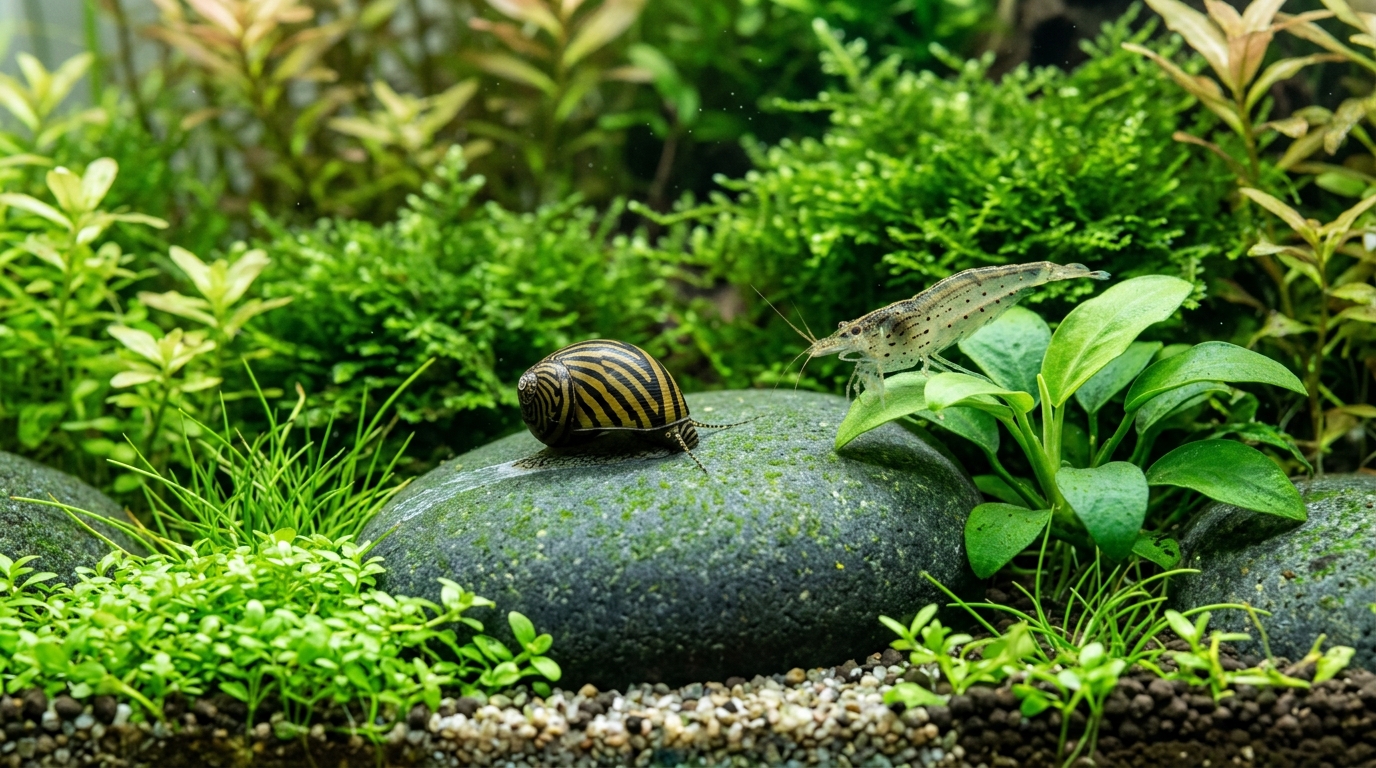
- Nerite Snails (Neritina natalensis): Nerite snails are arguably the greatest glass cleaners in the freshwater hobby. They tirelessly rasp away tough green spot algae and diatoms without eating live plants, and their eggs cannot hatch in freshwater, preventing accidental population explosions.
- Amano Shrimp (Caridina multidentata): Renowned in the aquascaping world, Amano shrimp are ferocious eaters of soft green algae, hair algae, and leftover organic food particles.
- Otocinclus Catfish (Otocinclus spp.): For tanks with gentle currents, a small group of three to four Otocinclus catfish works wonders on plant leaves, keeping broad foliage smooth and free of green film.
- Cherry Shrimp (Neocaridina davidi): These colorful dwarf shrimp constantly pick at mosses, hardscape, and plant stems, consuming micro-algae and biofilm all day long.
| Algae Type | Appearance | Root Cause | Best Natural Fix |
|---|---|---|---|
| Brown Diatom Algae | Dusty brown film on glass and rocks | High silicates in new setups, low light | Nerite snails & time (fades naturally) |
| Green Dust Algae | Green haze coating viewing glass | Excess light duration or window sunlight | Magnetic glass scraper & reduce light to 6 hrs |
| Green Hair / Thread Algae | Stringy green filaments on plants | Nutrient imbalance, excess iron or light | Amano shrimp & manual removal with toothbrush |
| Black Beard Algae (BBA) | Stubborn dark tufts on wood and edges | Fluctuating CO2 levels, low water circulation | Siamese Algae Eater, spot treatment with hydrogen peroxide |
Safe Manual Cleaning Techniques Without Chemicals
While biological balance and clean-up critters do the heavy lifting, occasional manual maintenance keeps your glass crystal clear without disturbing the tank’s delicate balance. Incorporating gentle mechanical cleaning into your regular routine is easy and safe.
Here are the best physical cleaning practices for your aquarium:
- Use a Magnetic Glass Scraper: Magnetic scrubbers allow you to wipe down the inside of the glass without getting your hands wet. Be careful not to pick up substrate grains near the gravel line to avoid scratching glass or acrylic.
- Toothbrush for Hardscape: A dedicated, brand-new, soft-bristled toothbrush is the perfect tool for twirling hair algae off driftwood, stones, and filter intake tubes.
- Wipe Before Water Changes: Always scrape the glass right before performing your partial water change, allowing your siphon hose to suck up floating algae particles immediately.
The Power of Live Plants in Outcompeting Algae
One of the most effective long-term secrets of how to control algae in aquarium naturally is adding fast-growing live aquarium plants. Plants and algae compete for the exact same pool of dissolved nutrients and light. When you provide your aquarium with healthy live plants—such as Java Moss, Hornwort, Anubias, and Cryptocorynes—they consume excess nutrients rapidly, leaving virtually nothing behind for algae to utilize.
Think of live plants as your aquarium’s natural defense shield. By maintaining a healthy biological biomass of live greenery, you create an environment where plants naturally suppress algae through nutrient competition, creating crystal-clear water with minimal manual scrubbing.
Common Algae Control Mistakes and How to Avoid Them
When battling an unsightly patch of algae, well-meaning aquarists sometimes take drastic measures that inadvertently worsen the situation. Being mindful of these common missteps will protect your aquatic ecosystem:
- Dosing Harsh Chemical Algaecides: Chemical algaecides provide a temporary cosmetic fix but can severely stress sensitive fish, live plants, and beneficial nitrifying bacteria. Always address the root cause naturally.
- Blacking Out the Tank Too Frequently: Total blackouts (covering the tank with blankets for days) can kill algae, but also starve your living plants of light, causing leaves to decay and releasing a secondary nutrient spike.
- Scrubbing Filter Sponges in Tap Water: In an attempt to clean away brown film, hobbyists sometimes wash filter media under the faucet, which kills beneficial bacteria and stalls biological filtration.
- Adding Too Many Clean-Up Animals: Clean-up critters still contribute to the tank’s bio-load. Stock only an appropriate number for your aquarium size so their waste does not cancel out their cleaning benefits.
- Performing 100% Water Changes: Drastically draining all water destabilizes pH and water chemistry, causing biological shock that actually weakens plants and encourages opportunistic algae.
Frequently Asked Questions (FAQ)
Will adding chemical algae-killers solve my algae problem permanently?
No. Chemical algaecides only treat symptoms temporarily and can harm sensitive fish, live plants, and beneficial bacteria. The only permanent fix is balancing lighting duration and removing excess organic waste through routine maintenance.
Which snail is best for cleaning algae in a freshwater tank?
Nerite snails are the undisputed champions of algae cleanup. They voraciously clean green dust and brown diatom algae from glass and rocks, and their eggs cannot hatch in freshwater, preventing population explosions.
How often should I change water to prevent algae buildup?
A weekly 20% to 25% water change exports accumulated nitrates and phosphates before algae can consume them. Read our full breakdown on how often should you change aquarium water.
Conclusion
Discovering how to control algae in aquarium naturally is fundamentally about patience and understanding your tank’s biological balance. Algae is not an enemy to be eliminated with aggressive chemicals, but a gentle reminder to adjust light durations, feed responsibly, and maintain steady weekly water changes. By combining sensible photoperiods, diligent maintenance, live plants, and helpful clean-up critters, you can effortlessly maintain a sparkling, beautiful aquarium that showcases your freshwater fish in pure natural glory.
Recommended Related Guides & Resources:
Continue building your freshwater fishkeeping knowledge with our related walkthroughs:
- Explore our comprehensive guide on corydoras catfish care guide.
- Check out our essential walkthrough on aquarium water change schedule guide.
Educational reference: Consult official aquatic algae biological growth mechanisms for deeper biological background.