


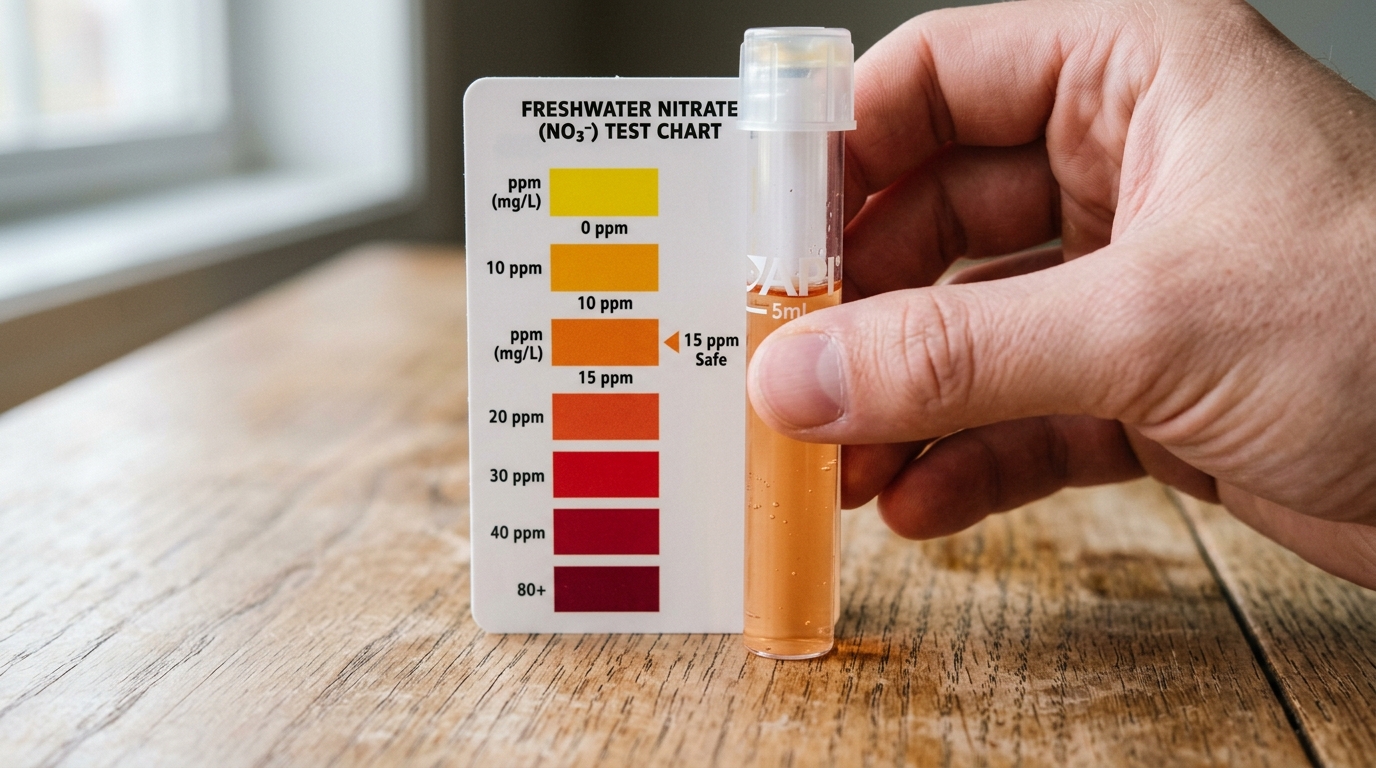
In a properly established aquarium, the biological nitrogen cycle functions around the clock to safeguard your fish from lethal toxins. Beneficial nitrifying bacteria consume invisible, highly toxic ammonia and convert it into nitrite, followed swiftly by secondary bacteria transforming nitrite into nitrate (NO3). While nitrate is far less acutely poisonous than ammonia or nitrite, allowing it to climb unchecked into dangerous concentrations is one of the most common causes of chronic fish illness, suppressed immune systems, failed breeding, and uncontrollable green algae invasions.
- 0 to 20 ppm: Optimal range for sensitive dwarf shrimp, wild-caught species, and vibrant planted tanks.
- 20 to 40 ppm: Acceptable ceiling for hardy community fish such as rasboras, barbs, and tetras.
- 40 to 80 ppm: Stress zone; causes lethargy, weakened disease resistance, and rapid hair algae growth.
- 80+ ppm: Dangerous toxicity zone; triggers severe osmotic stress and life-shortening internal organ strain.
What Causes High Nitrates in Freshwater Aquariums?
Because freshwater aquariums lack the anaerobic deep-sand or porous reef-rock zones found in marine environments, natural denitrifying bacteria (which convert nitrate into inert nitrogen gas) are virtually absent. Consequently, nitrate is a cumulative end-product. If you do not actively remove it, it accumulates indefinitely.
The primary contributors to rapid nitrate spikes include:
- Overfeeding: Uneaten flakes and sinking pellets dissolve into organic sludge within hours, breaking down into massive ammonia spikes that bacteria promptly oxidize into nitrates.
- Overstocking: Keeping too many fish in a small water volume produces more biological waste than standard filtration and water changes can dilute.
- Hidden Organic Matter: Decaying plant leaves, dead snails, or clogged mechanical filter media trapped inside your filter housing act as continuous nitrate factories.
- Nitrates in Municipal Tap Water: In agricultural and suburban regions, fertilizer runoff often contaminates groundwater supplies. In some areas, municipal tap water tests at 10 to 40 ppm nitrate straight from the kitchen faucet! Always test your raw tap water with a liquid test kit before troubleshooting your tank.
Beware of “Old Tank Syndrome”: Why Gradual Reduction is Essential
If your aquarium tests at 80 to 160+ ppm nitrate due to months of skipped water changes, your natural instinct might be to perform an immediate, massive 90% water change. Do not do this.
Over months of gradual neglect, fish adapt physiologically to severe water hardness and elevated nitrate concentrations. If you replace 90% of that water instantly with pristine, soft water, the sudden change in total dissolved solids (TDS) and pH triggers osmotic shock. This shock can kill fish within hours, even though the new water is chemically cleaner.
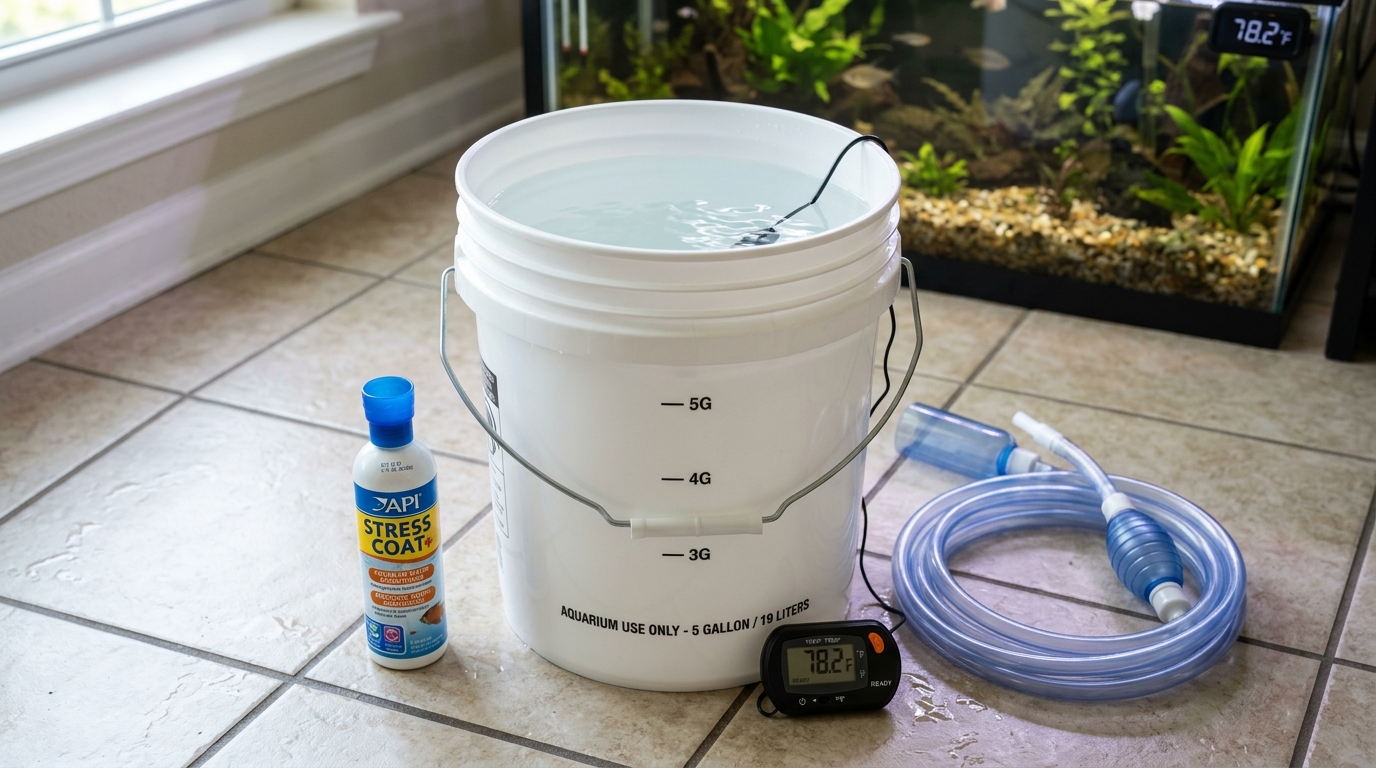
Instead, follow the gradual reduction protocol: perform small 20% to 25% water changes every 48 hours over the course of 10 to 14 days until your nitrates drop smoothly below 20 ppm without stressing your livestock.
Natural and Proven Methods to Reduce Nitrates
1. Scheduled Partial Water Changes with Siphoning
Water changes remain the gold-standard method for physical nitrate reduction. If your aquarium contains 40 ppm nitrate and you perform a 50% water change with nitrate-free freshwater, your nitrate concentration immediately drops to 20 ppm through mathematical dilution.
When performing water changes, always use a gravel vacuum to siphon accumulated fish waste, detritus, and mulm from the substrate. Removing organic waste before it decomposes prevents future nitrate production at the source.
2. The Pothos Vine Secret (Emergent Root Filtration)
One of the best-kept secrets among advanced freshwater hobbyists is utilizing terrestrial houseplants for bio-filtration. The common golden pothos vine (Epipremnum aureum) is an insatiable nitrate consumer.
- Take healthy cuttings of pothos vines, rinse the stems thoroughly, and position them so only the roots and stems are submerged in your aquarium or filter outflow.
- Ensure the green leaves remain above the water surface in open air. Because the leaves have unlimited access to atmospheric carbon dioxide (CO2), the plant photosynthesizes at lightning speed, extracting nitrates and phosphates aggressively from your tank water.
- A well-rooted pothos plant can hold nitrates below 10 ppm in heavily stocked tanks with minimal intervention.
3. Fast-Growing Aquatic Plants and Floatters
Submerged plants that grow rapidly utilize nitrate as their primary nitrogen fertilizer. The most efficient aquatic nitrate sponges include:
- Floating Plants: Amazon frogbit, salvinia minima, and dwarf water lettuce. Their roots hang suspended directly in the water column, absorbing nitrogen compounds before algae can access them.
- Fast Stem Plants: Hornwort (Ceratophyllum demersum), water wisteria (Hygrophila difformis), and guppy grass (Najas guadalupensis) can grow several inches each week, locking up massive quantities of nitrate in their tissue.
4. Rinse Mechanical Filter Media Regularly
Coarse filter sponges and mechanical filter floss trap solid feces and debris. However, as water continues flowing through the clogged filter pad, bacteria break down those trapped solids into dissolved nitrates. Squeezing filter sponges in old tank water every 2 to 4 weeks removes trapped waste from the system entirely.
Nitrate Control Strategy Checklist
| Action Item | Recommended Frequency | Nitrate Impact |
|---|---|---|
| 25% Partial Water Change | Weekly to bi-weekly | Immediate 25% dilution of existing nitrates |
| Gravel Vacuum Siphoning | Every water change | Stops organic mulm from degrading into nitrates |
| Add Pothos or Floatters | One-time addition | Continuous biological absorption 24/7 |
| Mechanical Filter Rinsing | Every 3 to 4 weeks | Removes trapped organic debris before decomposition |
| Strict Feed Portion Control | Daily (consumed in <90s) | Prevents unnecessary nitrogen inputs into water column |
Frequently Asked Questions
Do chemical nitrate-absorbing filter pads really work?
Specialized resin media (such as selective ion-exchange resins or specialized purigen polymers) can help bind organic precursors before they break down into nitrates. However, they are temporary aids and should never replace regular partial water changes and live plant bio-filtration.
Can high nitrates kill freshwater fish directly?
While acute death from pure nitrate toxicity usually requires extreme levels exceeding 100 to 200 ppm, prolonged exposure to levels between 40 and 80 ppm damages internal organ function, causes swim bladder irritation, stunts growth in juvenile fish, and drastically reduces fertility.
What if my tap water already contains 20 ppm nitrate?
If your source tap water contains significant nitrates, standard water changes will only dilute tank water down to the tap water baseline. In this situation, the best solutions are incorporating dense surface floating plants, utilizing submerged Pothos roots, or installing a small Reverse Osmosis (RO) filtration system remineralized with aquarium buffer salts.
Recommended Related Guides & Resources:
Continue building your freshwater fishkeeping knowledge with our related walkthroughs:
- Explore our comprehensive guide on best beginner fish species.
- Check out our essential walkthrough on planted aquarium setup for beginners.
Educational reference: Consult official environmental toxicology of nitrate in freshwater for deeper biological background.