
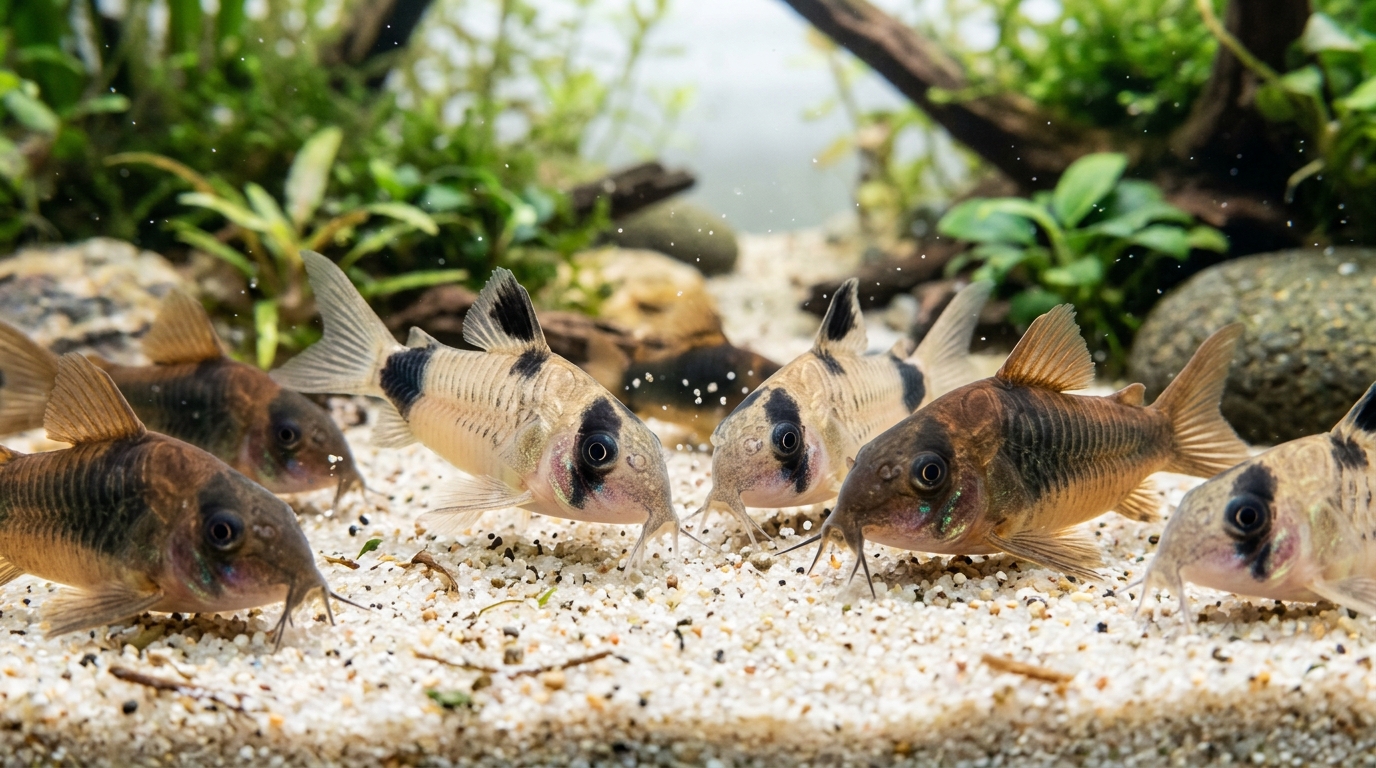
Few freshwater aquarium fish possess the enduring charm, peaceful disposition, and comical personality of Corydoras catfish. Belonging to the family Callichthyidae, these armored bottom-dwellers originate from the slow-moving streams, floodplains, and sandy riverbanks of South America. Known affectionately among hobbyists as “corys,” these hardworking fish spend their daylight hours actively snuffling through substrate, wiggling their fins, and darting up to the water surface for a quick gulp of atmospheric air. To keep them thriving, hobbyists must provide the right substrate, adequate social grouping, and species-appropriate nutrition.
The Critical Importance of Sand Substrate
If there is one non-negotiable rule when designing an aquarium for Corydoras catfish, it is choosing the correct substrate. Corys possess delicate, whisker-like sensory organs on their mouths known as barbels. In nature, they plunge their snouts deep into soft river sand to detect microscopic invertebrates, worms, and organic morsels.
- Why Sharp Gravel Is Harmful: Coarse, jagged, or painted gravel acts like sandpaper. As corys continuously root against sharp edges, their delicate barbels become abraded, blunt, and worn down. Open sores on damaged barbels quickly succumb to bacterial infections, permanently handicapping the fish ability to forage.
- Why Soft Sand Is Ideal: Soft natural river sand, pool filter sand, or fine cosmetic aquarium sand allows corys to express natural instinctual behaviors. They dive headfirst into the sand, sifting the fine grains through their mouths and puffing clean sand out behind their gill covers like tiny excavators.
Schooling Dynamics: Why Groups of Six or More Are Mandatory
Corydoras are intensely social shoaling fish. In the Amazon basin, wild schools consist of hundreds, sometimes thousands, of individuals traveling together across sandy riverbeds for collective security.
When well-meaning beginners buy only one or two corydoras, the fish become timid, reclusive, and chronically stressed, spending all day hidden behind driftwood or heater cables. To see their true playful behavior—foraging together in loose formations and resting in adorable cuddle piles on the sand—you must keep an absolute minimum of 6 individuals of the same species. While different species (such as Pandas and Bronzes) will occasionally intermingle, they shoal much more tightly and feel far more confident when grouped with their own kind.
Water Parameters and Tank Environment
Most commercial Corydoras varieties are exceptionally hardy captive-bred specimens that adjust readily to varied tap water chemistry:
- Tank Size: Minimum 10 gallons for dwarf species (such as Corydoras pygmaeus or habrosus); minimum 20 gallons long (75 liters) for standard species like Bronzes, Albinos, and Peppers. Long footprint aquariums are always preferred over tall tanks because floor surface area is what matters to bottom dwellers.
- Water Temperature: 72°F to 78°F (22°C to 25.5°C) for most standard species. Sterbai corydoras (Corydoras sterbai) are the notable exception, comfortably tolerating warm temperatures up to 82°F to 84°F (28°C to 29°C), making them the premier choice for warm discus tanks.
- pH Range: 6.2 to 7.6 (neutral to slightly acidic preferred).
- General Hardness (GH): 4 to 12 dGH.
- Oxygenation: Corydoras thrive in well-oxygenated water with good surface agitation. They possess a specialized vascularized intestine that allows them to breathe atmospheric air when needed, but constant frantic surface darting indicates depleted dissolved oxygen in the tank.
Proper Diet and Nutrition for Bottom Dwellers
Because midwater schooling fish like tetras and rasboras eat aggressively at the surface, standard flake foods rarely reach the bottom before being consumed. Corys require dense sinking foods that reach the substrate intact.
Recommended Feeding Regimen:
- Sinking Carnivore Pellets: Specially formulated protein-rich pellets that sink instantly to the bottom.
- Spirulina & Algae Wafers: Provide valuable plant matter, fiber, and trace minerals. Break large wafers into smaller chunks so all members of the school can feed simultaneously.
- Frozen and Live Delicacies: Frozen bloodworms, tubifex worms, daphnia, and live blackworms are eagerly devoured and stimulate natural foraging reflexes.
- Bug Bites Bottom Feeder Formula: Black soldier fly larvae pellets match the natural insect-heavy diet of wild Amazonian tributaries.
Popular Corydoras Species Comparison
| Species | Adult Size | Ideal Temp | Defining Trait |
|---|---|---|---|
| Bronze / Albino (C. aeneus) | 2.5 inches (6.5 cm) | 72°F – 78°F | Ultra-hardy; perfect for absolute beginners |
| Panda Cory (C. panda) | 1.8 inches (4.5 cm) | 70°F – 76°F | Distinctive eye mask and caudal spot; loves cooler water |
| Sterbai Cory (C. sterbai) | 2.6 inches (6.8 cm) | 78°F – 84°F | Bright orange pectoral fins; tolerates warm water |
| Peppered Cory (C. paleatus) | 2.4 inches (6.0 cm) | 68°F – 75°F | Marbled camouflage; thrives in unheated room-temp setups |
| Pygmy Cory (C. pygmaeus) | 1.0 inch (2.5 cm) | 72°F – 79°F | Nano tank king; frequently swims in midwater schools |
Breeding and The Famous T-Position
Corydoras are among the easiest egg-layers to breed in home aquariums. Spawning is frequently triggered by a cool-water change that mimics the arrival of the Amazonian rainy season. During courtship, the female locks her mouth perpendicular to the male pelvic region in the famous T-position, fertilizing eggs held between her pelvic fins before swimming over to paste them firmly onto glass walls or broad plant leaves.
Frequently Asked Questions
Why does my Corydoras shoot up to the surface so fast?
This is a completely normal physiological behavior known as intestinal air breathing. In their native waters, oxygen levels can plummet in stagnant shallow pools. Corys have evolved the ability to dash to the surface, swallow a gulp of atmospheric air, extract oxygen through their specialized intestinal lining, and expel spent gas. If all your fish are gasping constantly, verify your filter surface aeration.
Can Corydoras live with peaceful freshwater shrimp?
Yes. Adult Neocaridina (cherry) shrimp and Amano shrimp coexist harmoniously with Corydoras. Unlike predatory fish, corys do not actively hunt adult shrimp. Extremely tiny newborn shrimplets may occasionally be accidentally consumed during frantic bottom grazing, but heavily planted moss cover ensures high colony survival rates.
Can I mix different varieties of Corydoras together?
While you can mix different species in a single large tank, they prefer shoaling with members of their own kind. Rather than buying two Pandas, two Bronzes, and two Sterbais, your fish will be significantly happier and less stressed if you keep a cohesive school of six to eight individuals of a single variety.
Recommended Related Guides & Resources:
Continue building your freshwater fishkeeping knowledge with our related walkthroughs:
- Explore our comprehensive guide on planted aquarium setup for beginners.
- Check out our essential walkthrough on best low-tech aquarium plants.
Educational reference: Consult official Corydoras catfish biodiversity and South American riverine habitats for deeper biological background.