


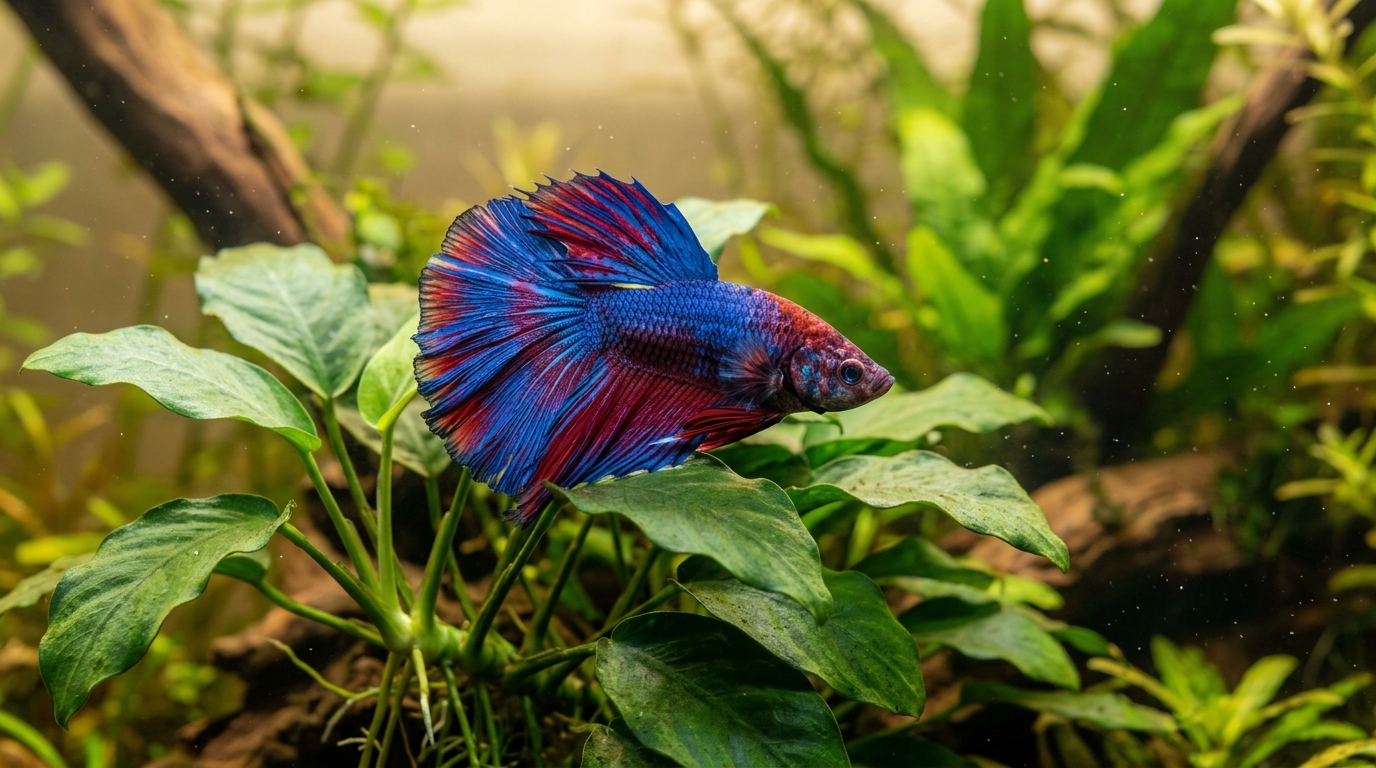
With their iridescent colors, flowing fins, and curious personalities, Betta fish (Betta splendens) are among the most beloved aquatic pets in the world. Unfortunately, they are also among the most misunderstood. Decades of marketing have perpetuated the myth that Bettas can happily spend their entire lives in tiny ornamental glass bowls or miniature plastic vases. In truth, these intelligent tropical fish require thoughtful care, stable warm water, and enriching habitats to flourish. In this complete betta fish care guide for complete beginners, we will walk you through setting up an ideal 5-gallon home, dial in the proper temperature and filtration, select wholesome nutrition, and help you enjoy a vibrant, interactive companion.
Key Takeaways & Quick Reference
- Humane Tank Size: 5 gallons minimum—glass bowls cause rapid temperature drops, waste accumulation, and lethargy.
- Tropical Warmth: Bettas require 78°F to 80°F (25.5°C to 27°C); an adjustable submersible heater is strictly necessary.
- Gentle Flow: Heavy motorized water flow exhausts long fins; use an air-driven sponge filter with gentle bubbling.
- Leaf Perches: Broad live plants like Anubias provide natural surface hammocks where Bettas rest and sleep.
Debunking the Bowl Myth: Tank Size Matters
In their native habitats across Southeast Asia, wild Bettas inhabit shallow rice paddies, marshes, and slow-moving streams. While these waters may be shallow during dry seasons, they represent vast interconnected ecosystems holding hundreds of gallons of water with continuous natural filtration. Confining a Betta to an unheated one-gallon bowl leads to rapid waste accumulation, severe temperature drops, and lethargy.
The humane minimum tank size for a single Betta fish is 5 gallons (approximately 19 liters). A 5-gallon rectangular aquarium offers several vital benefits:
- Dilutes Waste Products: Ammonia produced from waste builds up much slower in 5 gallons of water than in a tiny bowl, preventing toxic spikes.
- Accommodates Standard Equipment: Allows ample space for a reliable submersible heater, a gentle filter, and enriching live plants without cramping the fish.
- Encourages Active Swimming: Bettas are curious and enjoy patrolling distinct territories, exploring rock formations, and inspecting leaf perches.
- Maintains Thermal Stability: Larger water volumes resist rapid room temperature swings, keeping your pet consistently warm and stress-free.
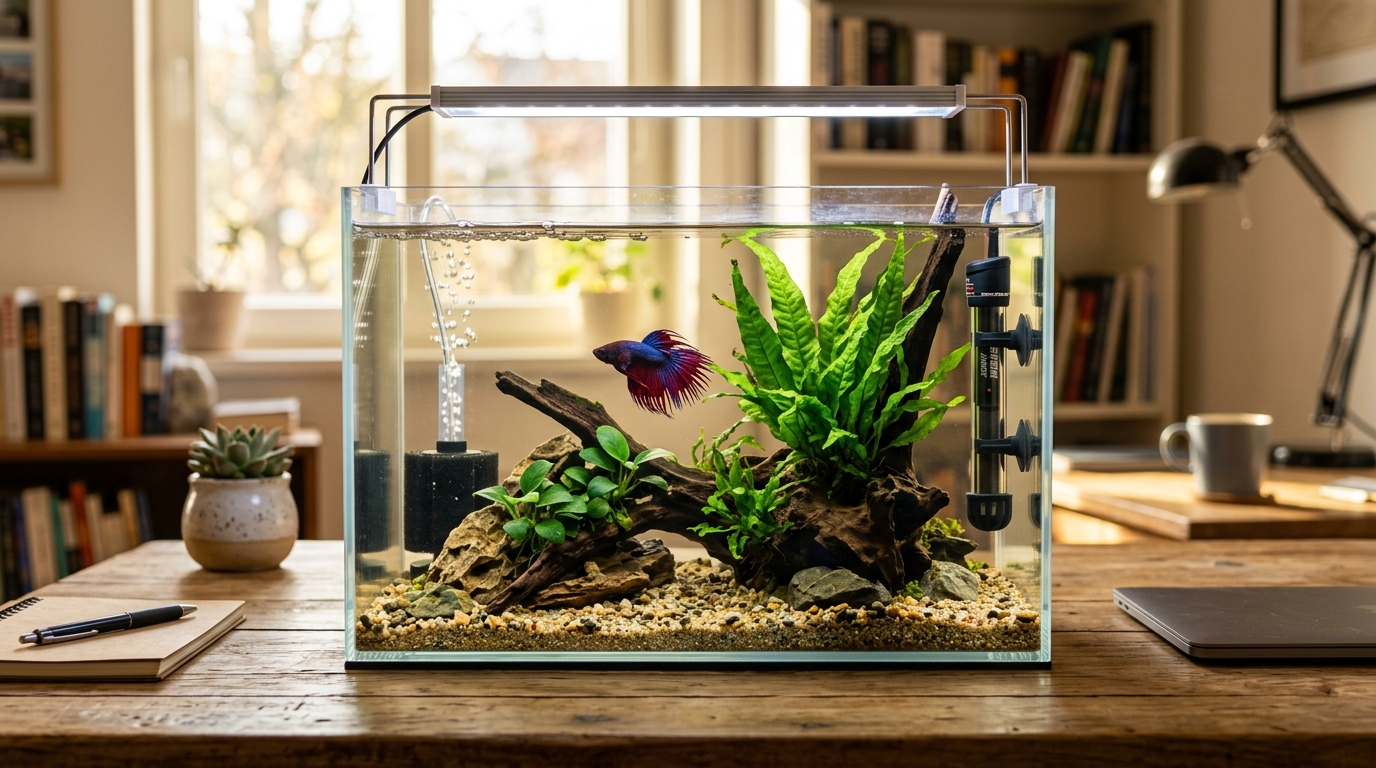
Temperature Control and Gentle Low-Flow Filtration
Two non-negotiable requirements highlighted in any responsible betta fish care guide for complete beginners are consistent heating and gentle water movement. Bettas are strictly tropical fish that thrive in temperatures between 78°F and 80°F (25.5°C to 27°C).
When kept in water below 75°F, a Betta’s metabolism slows down significantly. They become sluggish, rest on the gravel for hours, lose their vibrant color, and struggle to digest their food. A 25-watt or 50-watt submersible heater paired with an accurate thermometer is essential for maintaining this optimal tropical climate year-round.
Filtration requires equal care. Because domestic male Bettas have large, heavy, decorative fins, strong currents from powerful power filters will push them around the tank like a sail in a gale, exhausting the fish. A small air-driven sponge filter is the absolute best choice for Bettas. It produces gentle biological filtration, enriches oxygen without turbulent currents, and poses zero risk of trapping fragile fins in a motorized intake.
| Parameter | Ideal Target | Equipment Needed | Importance |
|---|---|---|---|
| Tank Volume | 5 to 10 Gallons | Glass aquarium with secure lid | Dilutes waste and allows natural exploration. |
| Temperature | 78°F – 80°F (25.5°C – 27°C) | 50W Submersible heater & thermometer | Maintains robust metabolism and healthy digestion. |
| Filtration | Very Low / Gentle Flow | Air-driven biological sponge filter | Prevents fin strain while maintaining clean water. |
| pH Level | 6.8 – 7.5 | Freshwater pH test kit | Near neutral water mirrors native Southeast Asian streams. |
| Diet | High Protein Micro Pellets | Whole soldier fly / krill based pellets | Prevents constipation and supports brilliant fin colors. |
Aquascaping with Live Plants and Safe Decor
Bettas possess a unique labyrinth organ that allows them to breathe atmospheric air directly from the water surface. Because of this adaptation and their heavy fins, they love resting near the surface. Providing broad-leafed aquatic plants gives them natural hammocks where they can sleep comfortably.
- Best Live Plants: Anubias Nana (mounted on wood), Java Fern, and floating Amazon Frogbit provide shade and resting perches near the waterline.
- Silk Plants Only (If Using Artificial): If you choose artificial decor, select soft silk plants rather than hard plastic. Plastic plant edges can easily snag and tear delicate Betta fin tissue. You can test decor using the “pantyhose test”—if an ornament snags fine nylon fabric, it is too sharp for a Betta.
- Hiding Caves: Smooth ceramic caves, coconut shells, or floating Betta logs give your pet a dark retreat when it wants privacy.
- A Secure Tank Lid: Bettas are natural jumpers that can easily leap out of open-top tanks when startled or pursuing flying insects. Always keep a secure lid in place.
Proper Feeding and Nutrition Guidelines
Bettas are specialized carnivores that require high-protein diets rich in insect and aquatic invertebrate meals. Feeding cheap generic flake food formulated for omnivores often leads to bloating and digestive sluggishness.
Feed high-quality floating micro pellets where whole soldier fly larvae, krill, or whole fish meal are listed as primary ingredients. Feed only 2 to 4 small pellets once or twice daily, 6 days a week. It is helpful to fast your Betta one day per week to allow its compact digestive tract to clear completely.
For enrichment, offer treats like freeze-dried bloodworms, frozen daphnia, or frozen brine shrimp once or twice a week. Soak freeze-dried items in a small cup of tank water for two minutes before feeding so they hydrate before entering the fish’s stomach.
Common Beginner Mistakes in Betta Keeping
Following this betta fish care guide for complete beginners will help you sidestep the most widespread pitfalls in the hobby:
- Housing two male Bettas together: Male Bettas are fiercely territorial and will fight aggressively. Keep only one male per tank.
- Skipping the nitrogen cycle: Setting up a tank and adding the fish on the very same day exposes the Betta to toxic ammonia burns. Always cycle the aquarium before introducing your pet.
- Using harsh chemical medications casually: Bettas are sensitive to heavy chemical additives. Pristine warm water and gentle care are the best medicine for keeping them healthy.
- Overfeeding out of affection: A Betta’s stomach is roughly the size of one of its eyeballs. Giving huge pinches of food is a leading cause of bloating and water quality degradation.
Frequently Asked Questions (FAQ)
Can a Betta fish really breathe atmospheric air?
Yes. Bettas possess a specialized organ called a labyrinth organ that allows them to take gulps of oxygen directly from the water surface. However, they still require clean, filtered, oxygenated water to thrive long-term.
Why does my Betta fish flare its fins when looking at the glass?
If room lighting is brighter than tank lighting, the glass reflects the Betta’s image like a mirror. The Betta perceives its reflection as a rival male and flares territorially. Keeping tank lights brighter than the room eliminates reflections.
Can I keep snails or shrimp with my Betta?
Nerite snails and larger Amano shrimp often make excellent peaceful tankmates. However, some individual Bettas will view small cherry shrimp as snacks, so personality varies.
Conclusion
Bettas are truly remarkable creatures with distinct quirks, expressive personalities, and stunning beauty. When provided with a heated, gently filtered 5-gallon aquarium decorated with lush live plants, your Betta will reward you by swimming up to greet you whenever you approach the glass. By following the fundamentals outlined in this guide, you will give your companion the long, joyful, and healthy life it truly deserves.
Recommended Related Guides & Resources:
Continue building your freshwater fishkeeping knowledge with our related walkthroughs:
- Explore our comprehensive guide on how to use a gravel vacuum siphon.
- Check out our essential walkthrough on 10-gallon fish tank setup walkthrough.
Educational reference: Consult official Betta splendens natural ecology and taxonomy for deeper biological background.