


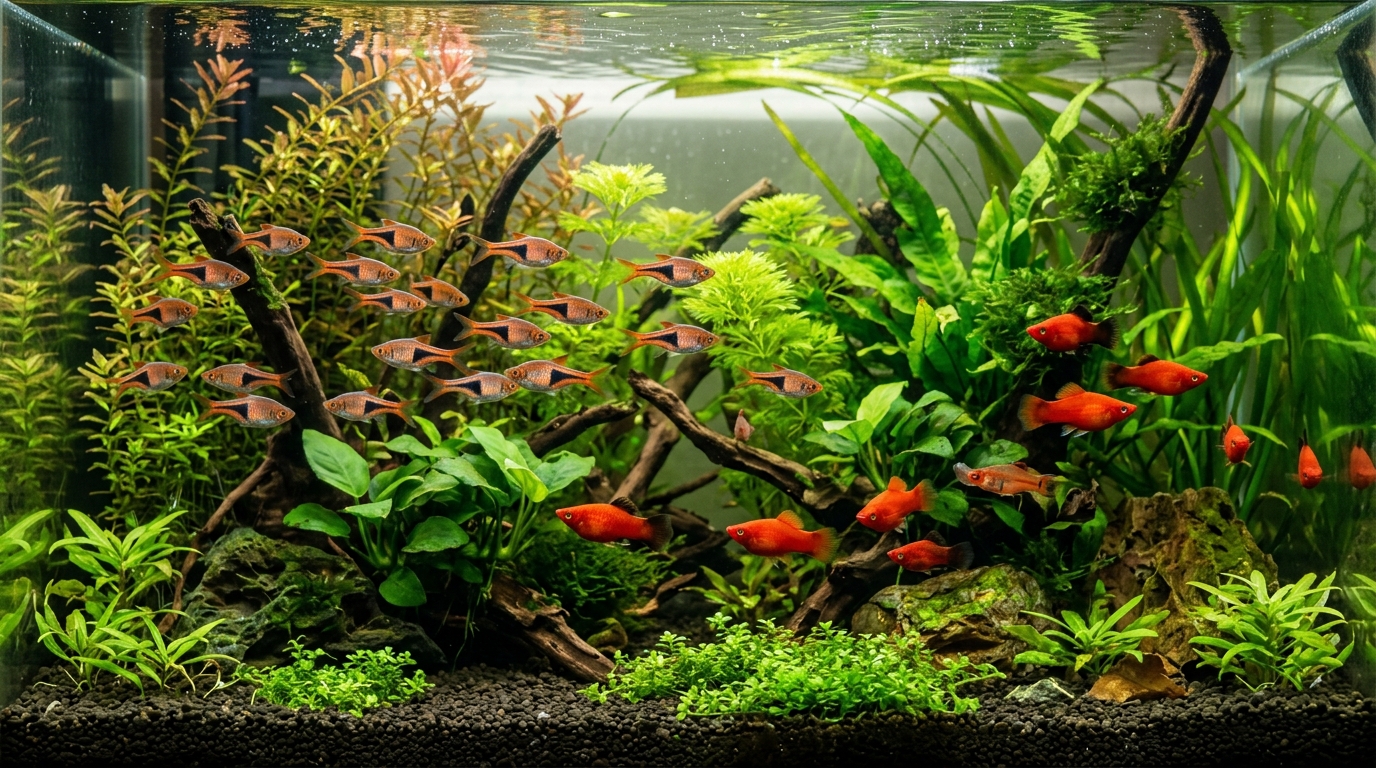
The harlequin rasbora (Trigonostigma heteromorpha) has earned its position as one of the most beloved freshwater community fish in the aquarium hobby. Famous for its striking metallic copper-orange body and bold triangular black patch, this peaceful shoaling fish brings calm energy and vivid motion to planted aquariums. Whether you are stocking your very first aquarium or looking for a gentle schooling species to complement live plants and bottom dwellers, harlequin rasboras provide unmatched reliability and quiet beauty.
Natural Habitat and Species Overview
Native to peat swamp forests and slow-moving forest streams across Malaysia, Singapore, Sumatra, and southern Thailand, harlequin rasboras have evolved in tranquil, heavily vegetated waterways. In the wild, their native waters are shaded by dense tropical canopy cover, with decaying leaf litter leaching natural tannins that soften the water and tint it a rich amber tea color.
Understanding their natural environment explains their captive preferences. Harlequin rasboras look and feel their best in tanks featuring dim or diffused lighting, dark substrate, and abundant aquatic vegetation where they can weave through stems and find secure resting areas.
Essential Water Parameters and Tank Size
Harlequin rasboras are remarkably adaptable to standard municipal tap water once properly cycled and dechlorinated. However, maintaining consistent water chemistry without sudden fluctuations is vital for long-term health and color vibrancy.
- Minimum Tank Size: 10 gallons for a starter school of 6 to 8 fish; 20 gallons long (75 liters) is strongly recommended for a full, natural school of 10 to 15 rasboras with swimming room.
- Water Temperature: 73°F to 82°F (23°C to 28°C), with 76°F to 78°F (24.5°C to 25.5°C) being the sweet spot.
- pH Range: 6.0 to 7.5. They tolerate neutral to slightly alkaline water, but soft, slightly acidic water brings out deep crimson-orange hues.
- General Hardness (GH): 4 to 12 dGH (soft to moderately hard water).
- Carbonate Hardness (KH): 2 to 8 dKH.
- Nitrogen Parameters: Ammonia: 0 ppm; Nitrite: 0 ppm; Nitrates: below 20 ppm.
Because they originate from calm forest streams, rasboras dislike chaotic, turbulent water flow. Choose a gentle sponge filter or an adjustable hang-on-back filter with a dispersed outflow to prevent buffeting their slender bodies against the glass.
Schooling Dynamics: Why Group Size Matters
One of the most frequent mistakes beginners make is purchasing only two or three harlequin rasboras. In the wild, these fish rely on safety in numbers to evade predators and navigate their environment. When isolated in small numbers, individual fish experience chronic physiological stress, lose their coloration, hide behind filter intakes, and refuse food.
To witness genuine schooling behavior and relaxed swimming patterns, keep an absolute minimum of 8 fish, with 10 to 12 being optimal. In larger groups, the fish establish a peaceful social hierarchy. Males occasionally engage in harmless, mesmerizing “sparring displays” where they flare their fins and swim parallel to one another without inflicting physical harm.
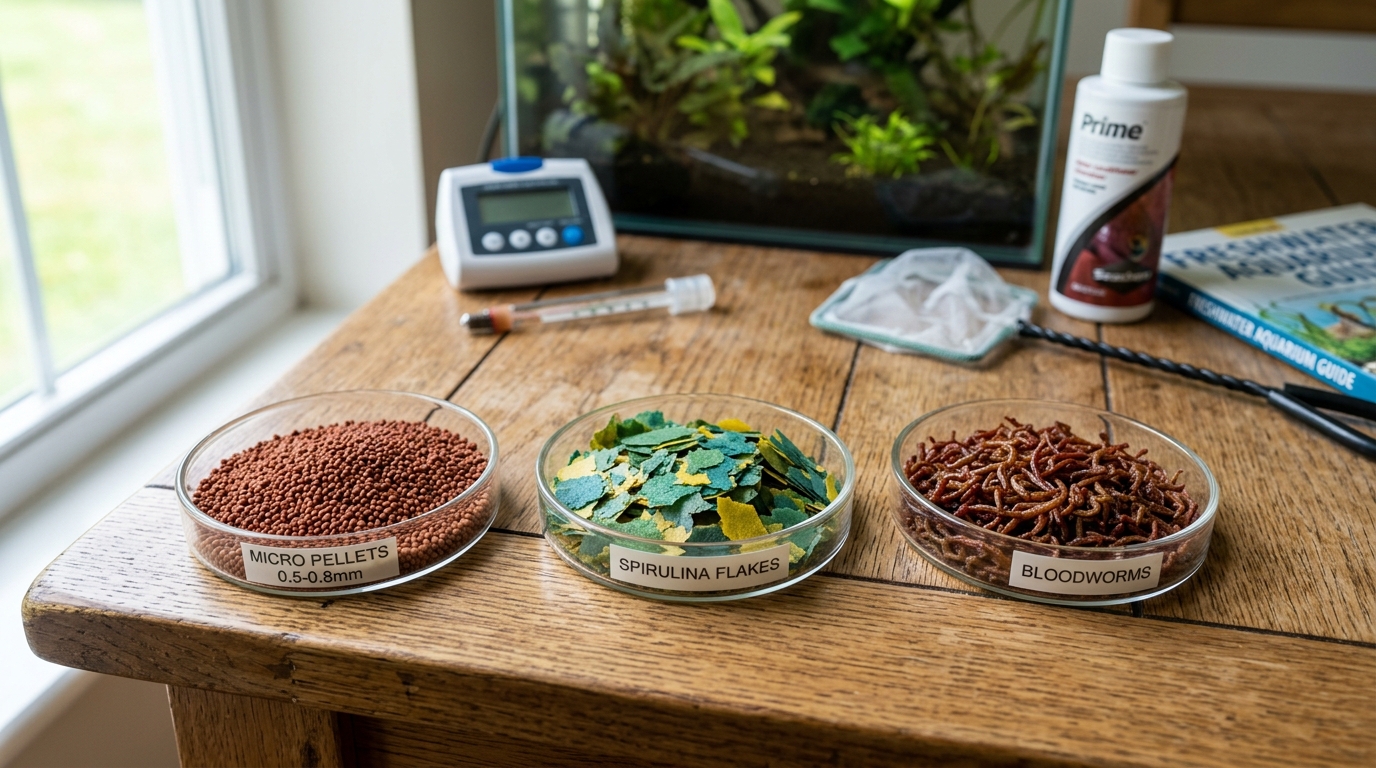
Diet, Nutrition, and Feeding Routine
Harlequin rasboras are omnivorous micropredators. Because they possess small, upturned mouths designed for picking food particles from the surface and middle water layers, large pellets or hard wafers are inappropriate.
Recommended Daily Foods:
- High-Quality Micro Pellets: Slow-sinking 0.5 mm to 1.0 mm pellets packed with whole fish meal and natural spirulina.
- Premium Crisps and Flakes: Crushed gently between your fingertips into bite-sized morsels before sprinkling on the water surface.
- Frozen and Live Foods: Feeding live or thawed baby brine shrimp, daphnia, or cyclops 2 to 3 times weekly fuels natural foraging instincts and boosts reproductive vitality.
- Freeze-Dried Treats: Freeze-dried bloodworms or daphnia soaked in tank water for 2 minutes prior to feeding to prevent buoyancy issues.
Feed your rasboras once or twice daily, providing only what the entire school can eagerly consume within 60 to 90 seconds. Any excess food sinking to the substrate degrades water quality and fuels nuisance algae blooms.
Best and Worst Tank Mates
Due to their non-aggressive disposition, harlequin rasboras can be housed alongside virtually any small, peaceful freshwater community resident.
Excellent Tank Mates:
- Midwater Schoolers: Neon tetras, ember tetras, green neon tetras, and black neon tetras.
- Gentle Centerpiece Fish: Honey gouramis, sparkling gouramis, or peaceful male betta fish (in tanks 15 gallons or larger with low current).
- Bottom Dwellers: Pygmy corydoras, panda corydoras, bronze corydoras, and otocinclus catfish.
- Invertebrates: Adult cherry shrimp, amano shrimp, nerite snails, and mystery snails.
Species to Avoid:
- Aggressive Cichlids: African rift lake cichlids, convict cichlids, and jack dempseys will treat rasboras as live prey.
- Nippy Fin-Biting Fish: Tiger barbs, serpae tetras, and bucktooth tetras can stress rasboras with erratic, aggressive darting.
- Large Predatory Fish: Angelfish can coexist when young, but fully mature adult angelfish frequently view slender adult rasboras as an opportunistic snack.
Aquascaping and Tank Layout for Rasboras
To make your harlequin rasboras feel secure and look their best, design an aquascape that mimics their peat swamp origins:
- Dark Substrate: Black aquarium sand or dark brown aqua soil makes the copper and neon-orange hues of the rasboras visually pop while reducing light reflection that causes stress.
- Live Plants: Plant broad-leafed varieties like Cryptocoryne wendtii, Anubias barterii, and Java Fern along the background and midground. Harlequin rasboras instinctively prefer depositing eggs under broad horizontal leaves.
- Floating Plants: Species like Amazon frogbit, red root floaters, and salvinia create dappled shade, mimicking tropical overhanging canopies.
- Driftwood and Botanicals: Spiderwood or Malaysian driftwood releases mild humic substances. Adding clean Indian almond (catappa) leaves provides mild antibacterial tannins and creates a natural blackwater aesthetic.
Harlequin Rasbora Quick Reference Care Table
| Category | Recommended Specification | Hobbyist Notes |
|---|---|---|
| Scientific Name | Trigonostigma heteromorpha | Formerly classified as Rasbora heteromorpha |
| Adult Size | 1.5 to 2.0 inches (3.8 to 5 cm) | Slightly deeper body than neon tetras |
| Lifespan | 5 to 8 years | With stable water chemistry and low nitrates |
| School Minimum | 8+ individuals | 10 to 12 provides tight, synchronized shoaling |
| Swimming Level | Middle to Upper-Middle | Fills open midwater swimming corridors |
| Care Difficulty | Beginner-friendly | One of the hardiest small community species |
Frequently Asked Questions
How long do harlequin rasboras live in captivity?
When maintained in a cycled aquarium with regular partial water changes, low nitrate levels (under 20 ppm), and a diverse diet, harlequin rasboras routinely live between 5 and 8 years. Their longevity is significantly greater than smaller nano rasboras.
Can harlequin rasboras live with a betta fish?
Yes, provided the aquarium is at least 15 to 20 gallons with ample live plants. Because harlequin rasboras do not possess long flowing fins and do not nip at betta tails, they generally ignore the betta. Ensure the betta possesses a mild temperament, as hyper-aggressive individual bettas may dislike active schooling fish in small tanks.
Why are my harlequin rasboras pale and losing their color?
Paler coloration is almost always an indicator of environmental stress. The three most common causes are recent introduction to a new aquarium (acclimation stress), poor water chemistry (elevated ammonia, nitrite, or nitrate), or being kept in a group smaller than 6 fish. Test your water parameters immediately and verify adequate school size.
Recommended Related Guides & Resources:
Continue building your freshwater fishkeeping knowledge with our related walkthroughs:
- Explore our comprehensive guide on fish appetite and health diagnosis.
- Check out our essential walkthrough on corydoras catfish care guide.
Educational reference: Consult official Trigonostigma heteromorpha biological taxonomy for deeper biological background.