






For most beginners entering the aquarium hobby, the phrase “partial water change” evokes mental images of spilled buckets, wet carpets, and the unpleasant fear of sucking on a garden hose with their mouth to start a siphon. Fortunately, mastering an aquarium gravel vacuum does not require complicated gadgets or mouth siphoning. With a firm grasp of basic fluid mechanics and a few simple hand motions, cleaning your substrate and draining aquarium water can be completed in minutes without a single drop hitting your living room floor.
The Anatomy of a Standard Gravel Vacuum
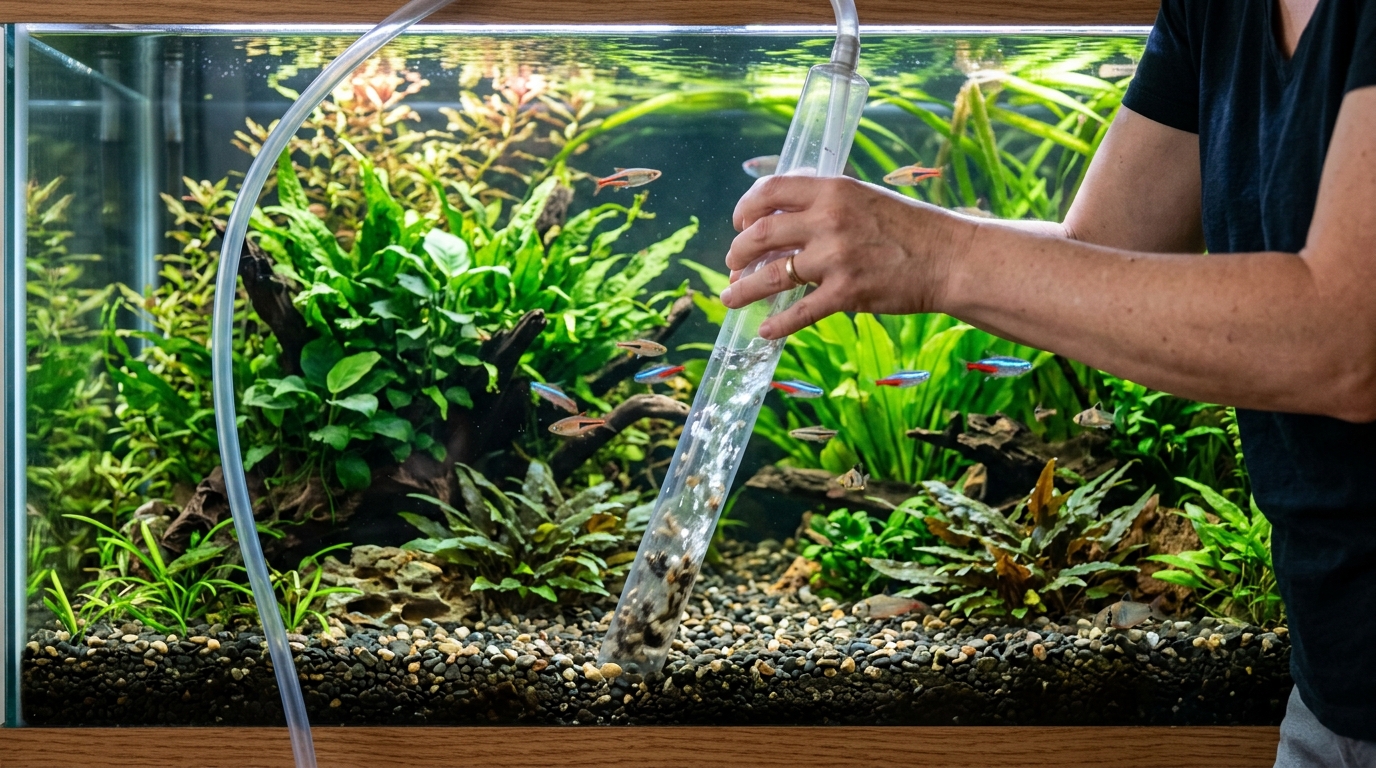
A standard manual gravel vacuum (also known as a siphon tube) consists of three interconnected parts:
- The Rigid Vacuum Cylinder: A wide plastic tube (typically 1.5 to 2.5 inches in diameter). Its wide diameter slows down water velocity inside the tube, allowing dense gravel to tumble and fall back down while lighter fish waste and mulm are swept upward.
- The Flexible Vinyl Hose: A 4- to 6-foot length of flexible tubing that transports dirty water from the cylinder down into your collection bucket.
- The Hose Clip or Bucket Clamp: A small plastic clamp that fixes the end of the discharge hose securely to the rim of your bucket so it cannot whip out under water pressure.
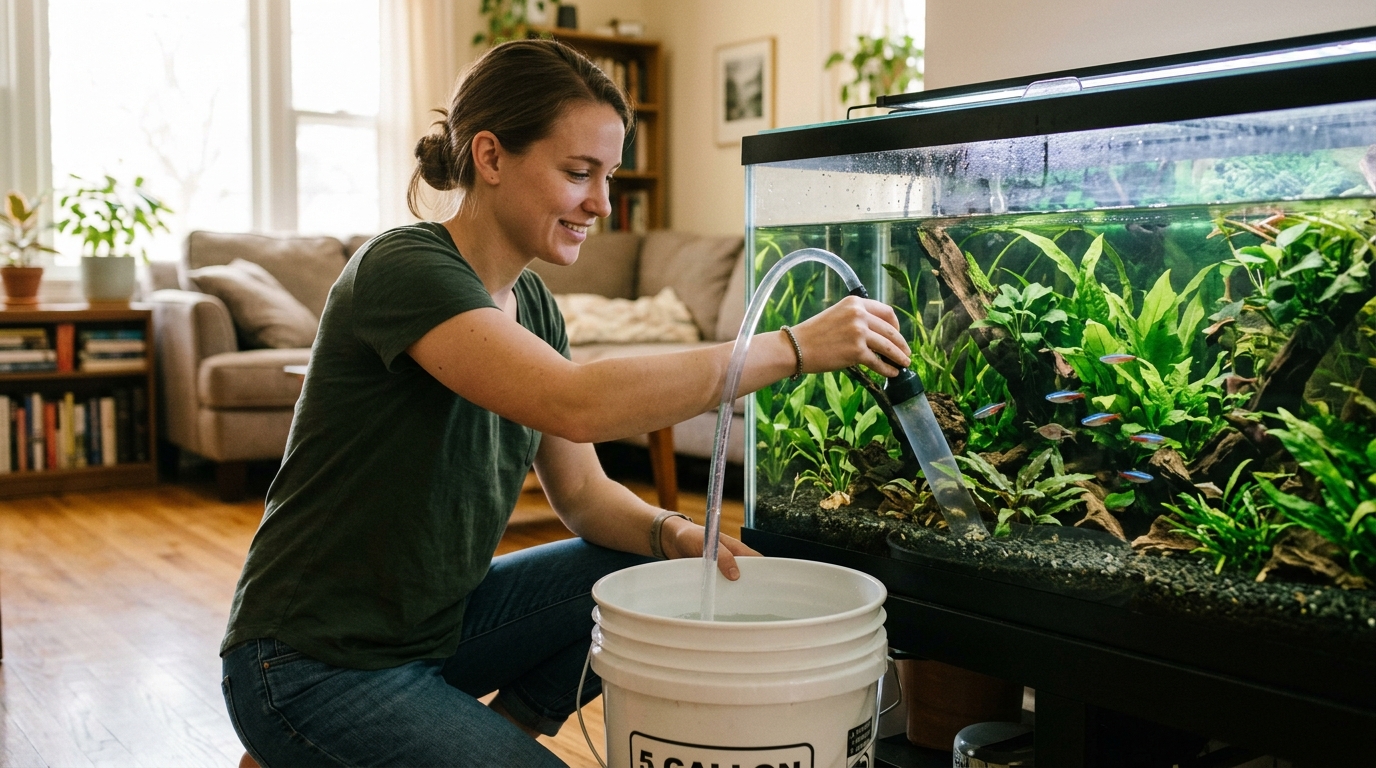

3 Ways to Start a Siphon (Without Ever Using Your Mouth)
Never put your mouth on an aquarium siphon tube. Fish water contains aquatic bacteria and biological pathogens that can cause severe gastrointestinal distress. Use one of these three clean, professional methods instead:
Method 1: The “Submerge, Lift, and Plunge” Technique (Most Reliable)
- Clamp the drainage hose securely inside your bucket on the floor.
- Submerge the wide plastic vacuum cylinder completely into the aquarium at a 45-degree angle until it fills entirely with water and all air bubbles escape.
- Lift the cylinder vertically above the water surface for one second so water starts rushing down into the vinyl tubing.
- Before the cylinder empties completely, immediately plunge it back beneath the water surface. The rushing water inside the hose creates an instant vacuum suction, pulling continuous water behind it. Your siphon is started!
Method 2: The Squeeze Bulb Primer
Many modern siphons come equipped with an integrated rubber priming bulb. Simply submerge the vacuum cylinder in the tank, place the hose in your bucket, and squeeze the bulb firmly 3 to 4 times. Each squeeze draws water across the internal check valve until gravity takes over.
Method 3: The Full Submersion Roll
For small desktop aquariums (5 to 10 gallons): Submerge the entire gravel vacuum and hose underwater inside the tank until every cubic inch of air bubbles out. Keep your thumb firmly over the hose exit, lift only the hose end over the tank edge down into your bucket, and release your thumb. The water trapped in the tube immediately initiates flow.
How to Clean Gravel vs. Sand Substrates
Cleaning Coarse Pea Gravel:
- Push the wide plastic cylinder straight down into the gravel until you touch the bottom glass plate.
- Watch the gravel tumble and “dance” inside the bottom 2 inches of the plastic tube. Light organic mulm, uneaten food, and fish feces will separate from the stones and shoot up into the hose.
- To stop gravel from being sucked all the way into your bucket, slightly crimp the flexible hose with your thumb or tilt the cylinder sideways. The heavy gravel drops back down clean.
- Lift the cylinder and push down into an adjacent section of gravel. Work systematically in a grid across the front open spaces of your tank.
Cleaning Fine Aquarium Sand:
- Do not plunge the vacuum into sand! Because sand particles are fine and lightweight, plunging into the substrate will instantly suck pounds of expensive sand into your drainage bucket and clog your plumbing.
- Instead, hover the rim of the vacuum cylinder 1/2 inch to 1 inch above the sand surface.
- Make small swirling circular motions with the cylinder. The gentle vortex will swirl lightweight detritus and fish waste up into the water column where the siphon effortlessly captures it, leaving the dense sand undisturbed on the bottom.
Critical Safety Rules Before Draining Water
- Unplug Heaters and Submersible Equipment: Fully glass submersible heaters can shatter if exposed to air while operating, and filter motors can burn out if run dry. Always unplug heaters and filters 5 minutes prior to siphoning.
- Anchor the Drainage Hose: Never trust a loose vinyl hose to stay inside a bucket on its own. Water pressure causes flexible hoses to writhe and kick out, dumping gallons of dirty water onto floors. Always use a bucket clamp or hold the hose firmly with one hand.
- Watch the Bucket Fill Line: Siphoning moves faster than you think! Keep your eyes on the bucket water level and crimp the hose with your fingers when the bucket is 75% full to avoid heavy spills while carrying it to the drain.
Substrate Cleaning Method Matrix
| Substrate Type | Vacuum Motion | Penetration Depth | Crimp Frequency |
|---|---|---|---|
| Coarse River Gravel | Vertical plunge | Full depth to bottom glass | Moderate (when gravel climbs >50%) |
| Fine Natural Sand | Gentle hover and swirl | Zero (hover 0.5 inches above) | Low (avoid drawing sand into tube) |
| Planted Aqua Soil | Surface skimming only | Zero (plunging crushes soil granules into mud) | High (preserve delicate granules) |
| Bare Bottom Tank | Direct contact gliding | Glide directly across glass floor | None needed (instant total waste removal) |
Frequently Asked Questions
What should I do if a curious fish gets sucked into the siphon?
Immediately crimp the flexible vinyl hose with your hand to halt water flow instantly. Once water flow stops, the fish will easily swim back out of the wide cylinder into the open tank. If the fish is carried into the bucket, gently retrieve it using a soft fish net and return it to the aquarium.
How often should I vacuum the gravel?
In standard community aquariums, vacuuming open substrate areas during your scheduled weekly or bi-weekly water change keeps organic waste under tight control. Avoid disturbing heavily rooted plant zones, as living root systems absorb and utilize organic nutrients naturally.
Can I clean gravel in a planted tank without uprooting plants?
Yes. Simply vacuum the open swimming foreground and clear pathways between hardscape rocks. The undisturbed mulm around the root systems of Amazon swords and cryptocorynes provides valuable long-term nutrition for healthy plant growth.
Recommended Related Guides & Resources:
Continue building your freshwater fishkeeping knowledge with our related walkthroughs:
- Explore our comprehensive guide on how to clean a fish tank safely.
- Check out our essential walkthrough on 10-gallon fish tank setup walkthrough.
Educational reference: Consult official fluid dynamics and gravitational siphon principles for deeper biological background.


