





Transforming a plain glass tank into a lush, vibrant underwater garden is one of the most fulfilling aspects of freshwater fishkeeping. However, many beginners are intimidated by high-tech planted aquariums that require pressurized carbon dioxide cylinders, complicated liquid dosing regimens, and expensive specialized grow lights. The good news is that you do not need complicated equipment to enjoy a thriving green aquascape. In this comprehensive guide, we will explore the best aquarium plants that need no CO2 or fertilizer, allowing you to create a natural, low-maintenance aquatic habitat where living greenery and fish thrive in harmonious balance.
- Why Low-Tech Aquarium Plants Are Ideal for Beginners
- Top 5 Indestructible Live Plants for Low-Maintenance Tanks
- Lighting and Environmental Setup for Low-Tech Plants
- Natural Plant Nutrition: Letting Fish Waste Do the Work
- How Live Plants Improve Water Quality and Fish Health
- Common Beginner Mistakes with Live Aquarium Plants
- Frequently Asked Questions (FAQ)
- Conclusion
Key Takeaways & Quick Reference
- Epiphyte Rule: Never bury the thick green rhizome of Anubias or Java Fern in gravel; attach them to driftwood or rocks.
- Low-Light Tolerant: Require only 6 to 7 hours of standard LED light per day to flourish.
- Natural Bio-Filters: Absorb fish waste and nitrates naturally, curbing nuisance algae and enriching water oxygenation.
- Setup Guide: Check out our detailed guide on how to set up a planted aquarium for beginners for aquascaping tips.
Why Low-Tech Aquarium Plants Are Ideal for Beginners
Low-tech aquatic plants are species that have adapted in nature to survive in slow-moving, nutrient-modest waters where carbon dioxide and intense sunlight are limited. These plants grow at a steady, manageable pace, which means they do not demand intensive pruning, commercial substrate additives, or precise nutrient ratios. For new aquarium keepers, this slow and steady growth rate is a massive advantage because it naturally minimizes the risk of sudden nutrient imbalances that often lead to nuisance algae blooms.
Beyond visual elegance, living plants serve vital biological functions in your home aquarium. They absorb excess nitrates and waste byproducts produced by fish, helping keep your water parameters stable between routine water changes. They also continuously generate dissolved oxygen during daylight hours and provide comforting shelter, shade, and grazing surfaces for peaceful community fish, tiny fry, and freshwater shrimp. Choosing the best aquarium plants that need no CO2 or fertilizer allows you to enjoy all these biological benefits with zero stress and very little maintenance work.
Top 5 Indestructible Live Plants for Low-Maintenance Tanks
The following five freshwater plants are renowned among aquarists for their extraordinary hardiness, adaptability, and ability to flourish under basic aquarium lighting:
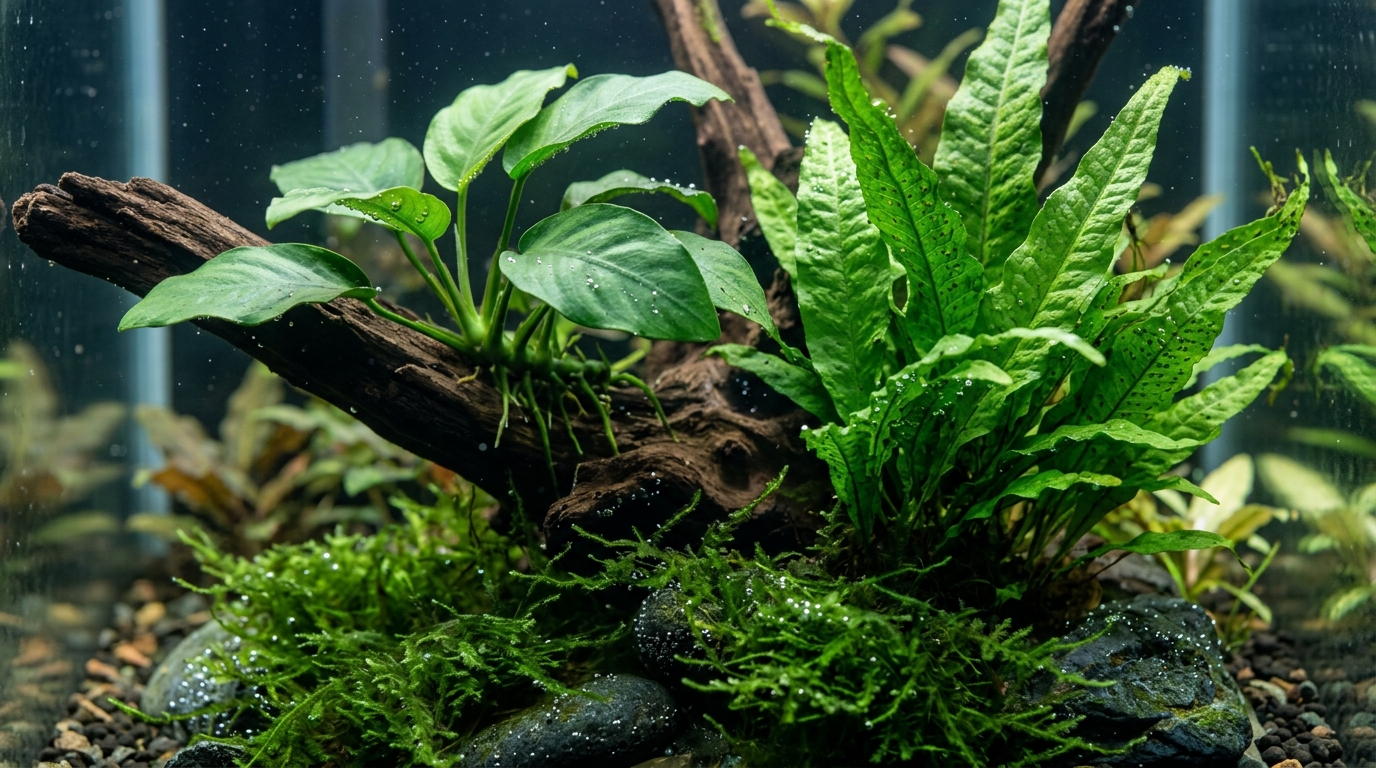
- 1. Anubias (Anubias barteri & Anubias nana): Anubias features thick, dark green leathery leaves that even plant-nibbling fish tend to leave untouched. It possesses a horizontal rhizome that should never be buried in the gravel; instead, attach it to rocks or driftwood using cotton thread or aquarium-safe glue. It thrives in low to moderate light and absorbs nutrients directly from the water column.
- 2. Java Fern (Microsorum pteropus): Like Anubias, Java Fern is an epiphytic plant with long, textured, flowing leaves. It grows happily attached to hardscape elements and tolerates virtually any freshwater parameters. If small plantlets sprout from the tips of older leaves, you can gently detach and replant them elsewhere in your aquarium.
- 3. Java Moss (Taxiphyllum barbieri): This soft, emerald-green creeping moss creates lush underwater carpets, blankets rocks, and provides an ideal natural grazing ground for baby fish and dwarf shrimp. It requires no substrate, tolerates cool or warm water, and thrives even in dim, low-light corners of your aquarium.
- 4. Cryptocoryne wendtii: Unlike epiphytes, Cryptocoryne species grow in the substrate and develop a compact, bushy rosette of brown, green, or bronze leaves. They adapt well to standard plain gravel, tolerate low light, and provide a lovely, natural foreground or midground aesthetic without any supplemental CO2 injection.
- 5. Marimo Moss Balls (Aegagropila linnaei): These charming velvety green spheres are actually a dense colony of slow-growing, beneficial filamentous green algae. They require zero planting or anchoring; simply drop them onto the substrate. Gently rolling them during water changes helps keep their round shape and cleans away settled debris.


Lighting and Environmental Setup for Low-Tech Plants
While low-maintenance plants do not require high-end specialty lighting, they still need modest, consistent illumination to conduct photosynthesis effectively. The standard LED light hood that typically comes bundled with beginner aquarium kits is usually more than adequate for low-tech species.
Here are practical guidelines to keep your plants healthy without encouraging unwanted algae growth:
- Moderate Photoperiod: Keep aquarium lights on for 6 to 8 hours daily. Using an inexpensive digital or mechanical plug-in timer ensures consistency, preventing accidental light overexposure that fuels algae.
- Position Away from Windows: Keep your aquarium away from direct outdoor sunlight, which can quickly overheat the water and trigger persistent green water or stubborn hair algae.
- Proper Planting Technique: Never bury the green rhizomes of Anubias or Java Fern into sand or gravel, as burying suffocates the stem and causes it to decay. Only bury true root-feeders like Cryptocorynes and Amazon Swords into the substrate.
- Gentle Water Circulation: Moderate filter flow ensures that dissolved nutrients and natural fish waste reach plant leaves evenly across all corners of the tank without buffering them aggressively.
Natural Plant Nutrition: Letting Fish Waste Do the Work
Beginners often ask how these plants can grow vigorously without adding commercial fertilizers from bottles or root tabs. In an established community aquarium, your living fish naturally act as a gentle, balanced fertilizer factory. When fish eat quality flakes and produce waste, that waste breaks down into beneficial micro-nutrients, trace minerals, potassium, and nitrates.
In addition, fish respiration releases natural carbon dioxide into the water column throughout the day and night, providing slow-growing plants with all the carbon they require to flourish. By keeping a modest, healthy stocking of peaceful fish and performing regular 20% partial water changes, your tank establishes a self-sustaining nutrient cycle that keeps the best aquarium plants that need no CO2 or fertilizer green and vibrant year after year.
| Plant Species | Planting Style | Lighting Requirement | Growth Speed |
|---|---|---|---|
| Anubias Barteri / Nana | Attach to wood or rock (Unburied rhizome) | Low to Moderate | Slow (1-2 leaves per month) |
| Java Fern (Microsorum) | Attach to hardscape decor | Low | Moderate |
| Cryptocoryne Wendtii | Plant in substrate (Feed root tabs) | Low to Moderate | Moderate compact rosette |
| Java Moss (Taxiphyllum) | Tie to rocks or drape over driftwood | Low to High | Fast creeping moss |
| Amazon Frogbit | Free-floating on water surface | Moderate | Fast (Absorbs nitrates directly) |
How Live Plants Improve Water Quality and Fish Health
Beyond their aesthetic appeal, live aquarium plants act as natural bio-filters that work alongside your mechanical filtration system. Plants actively consume dissolved ammonia and ammonium before it can accumulate to toxic concentrations, providing an extra safety cushion for your fish during unexpected spikes. Furthermore, the natural surface area provided by plant leaves creates ideal colonization zones for beneficial nitrifying micro-organisms.
Living plants also dramatically reduce stress in timid freshwater fish. When fish have broad leaves and moss thickets to duck beneath, they feel secure from perceived predators and display bolder swimming behavior, brighter colors, and more relaxed feeding habits. By including low-maintenance greenery, you create an enriching habitat that closely mirrors the wild streams and rivers where freshwater species originate.
Common Beginner Mistakes with Live Aquarium Plants
Even though low-tech species are remarkably tough, new hobbyists occasionally make simple setup mistakes that hinder early plant growth. Understanding these pitfalls ensures your planted tank remains healthy from day one:
- Panicking Over Initial “Melting”: When live plants are transferred to a new tank, they frequently shed their older leaves as they adapt to your local water chemistry. This “crypt melt” or transition phase is normal; leave the roots alone, and fresh, resilient leaves will sprout within a few weeks.
- Leaving Lights on 24 Hours a Day: Plants need a period of darkness to rest and respire. Leaving lights on overnight exhausts plants and invites thick green algae to coat leaf surfaces.
- Burying Epiphyte Rhizomes: As mentioned, burying the thick horizontal stem of Java Fern or Anubias leads to root rot. Always secure them to driftwood, lava rock, or ornaments using thread or plant glue.
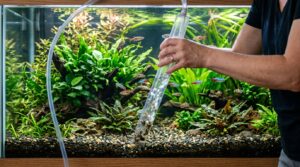
- Over-Cleaning the Substrate: While siphoning loose surface debris during water changes is essential, aggressively vacuuming deep into the root zones of Cryptocorynes strips away natural root nutrients.
- Adding Too Many Fast-Growing Stem Plants: Extremely fast-growing floating or stem plants may compete for limited nutrients. For true low-maintenance ease, stick primarily to slow-growing rosette and rhizome species.
Frequently Asked Questions (FAQ)
Can aquarium plants survive in plain gravel without special aqua soil?
Absolutely! Epiphytes like Anubias and Java Fern do not take nutrients through soil roots; they absorb minerals directly from the water column. Root-heavy plants in plain gravel simply benefit from an inexpensive root tab inserted near their base every three months.
Why are the leaves on my newly purchased plants turning yellow or melting?
Most commercial plants are grown emersed (out of water) by nurseries. When placed underwater in your aquarium, they naturally melt away terrestrial leaves and sprout resilient submerged aquatic foliage within 2 to 3 weeks.
How do live plants help prevent nuisance algae?
Healthy live plants compete directly with algae for light and dissolved nitrates. To learn more natural defense strategies, see our guide on how to control algae in aquarium naturally.
Conclusion
Building a captivating, green aquatic ecosystem does not require expensive technology or chemical supplements. By focusing on the best aquarium plants that need no CO2 or fertilizer, you can design a beautiful, relaxing underwater world that enhances the health of your fish while requiring minimal upkeep. Take your time arranging your hardscape, secure your hardy plants to rocks and wood, and let nature establish its gentle biological rhythm. With simple patience and steady observation, your planted freshwater aquarium will reward you with tranquil natural beauty every single day.
Recommended Related Guides & Resources:
Continue building your freshwater fishkeeping knowledge with our related walkthroughs:
- Explore our comprehensive guide on how to clean a fish tank safely.
- Check out our essential walkthrough on how to attach plants to driftwood.
Educational reference: Consult official botanical classification of Anubias species for deeper biological background.


