






Waking up in the morning to find your once crystal-clear fish tank transformed into a hazy, milky, or greenish fog is one of the most frustrating experiences for a fishkeeper. You may wonder what went wrong overnight and whether your fish are in immediate danger. If you are searching for answers to why is my aquarium water cloudy and how to fix it, take a deep breath: cloudy water is an extremely common phenomenon, especially in setups less than three months old. Understanding the specific visual nature of the haze is the key to resolving it safely, naturally, and permanently without relying on harsh chemical clearing agents.
- Identifying the Type of Cloudiness: Color Tells the Story
- The Science of Bacterial Blooms in New Aquariums
- Substrate Dust and Mechanical Filtration Upgrades
- Tackling Green Water Naturally Through Lighting Control
- Safe Step-by-Step Fixes for Clear Aquarium Water
- Common Mistakes That Prolong Water Cloudiness
- Frequently Asked Questions (FAQ)
- Conclusion
Key Takeaways & Quick Reference
- Milky White Haze: A harmless bacterial bloom common in new tanks; clears on its own in 3 to 7 days as biological balance matures.
- Avoid Giant Water Changes: Performing huge water changes during a bacterial bloom backfires by providing fresh nutrients for more bacteria.
- Mechanical Fix: For dusty cloudiness from gravel, add high-density polyfill filter floss to polish water in 24 hours.
- Green Water: Microscopic algae caused by excess light; reduce lighting to 6 hours daily or execute a 3-day blackout.
Identifying the Type of Cloudiness: Color Tells the Story
Not all cloudy water is the same. Before taking any corrective action, closely inspect the water under your aquarium light to determine its exact color and texture:
- Milky White or Gray Haze: The most common form of cloudiness, caused by a harmless microscopic bacterial bloom multiplying rapidly in the water column.
- Brownish or Grayish Dust: Tiny suspended mineral particles caused by unwashed substrate, gravel friction, or fine debris stirred up during maintenance.
- Green Water: A pea-soup or faint emerald haze caused by single-celled, free-floating micro-algae reproducing under excess light and dissolved nutrients.
- Yellowish or Tea-Colored Tint: Natural organic tannins released by natural driftwood, which soften water and lower pH but are completely harmless to fish.
The Science of Bacterial Blooms in New Aquariums
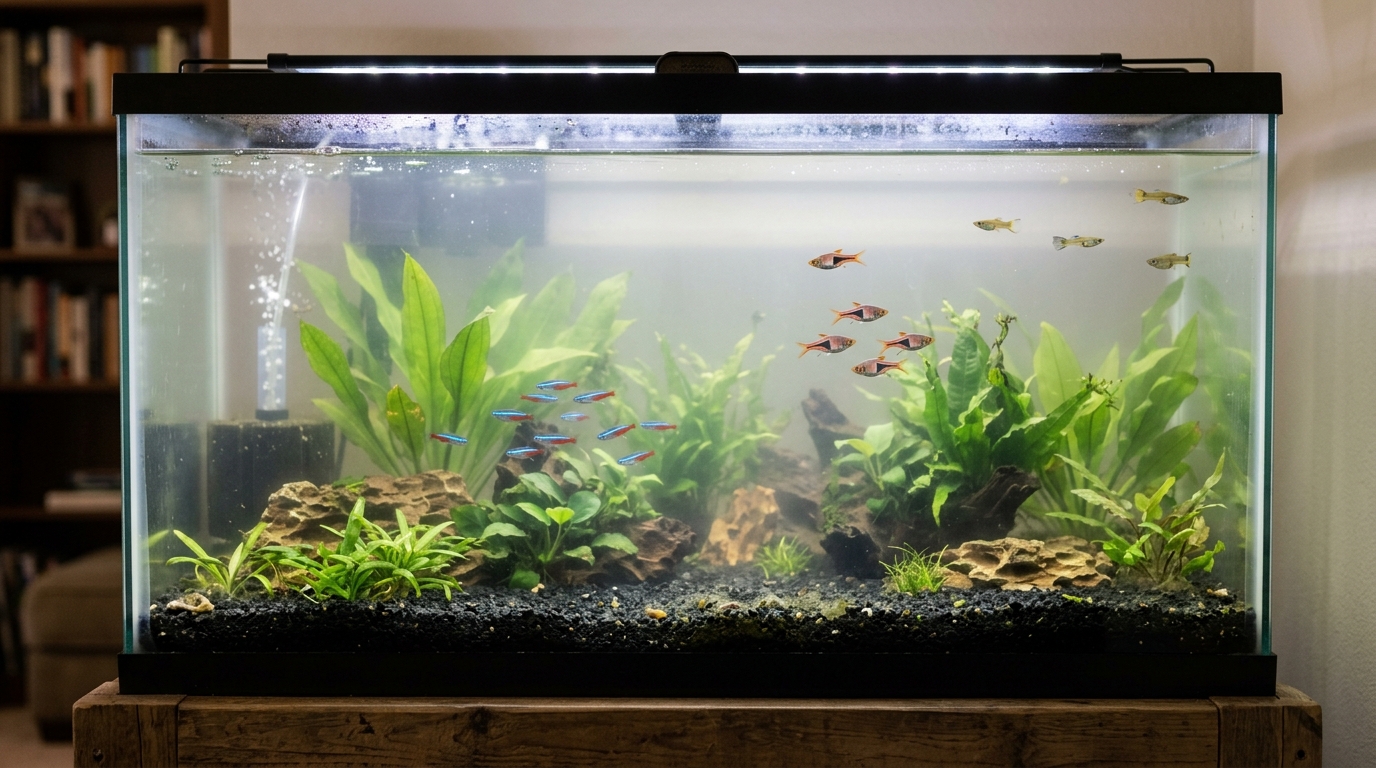
If your aquarium water appears milky white, you are witnessing a classic bacterial bloom. In a newly established or developing aquarium, the colony of beneficial nitrifying bacteria is still striving to reach equilibrium with the biological nutrients present in the water.
When there is an abundance of dissolved organic nutrients—from fish food, plant decay, or early cycling bioload—opportunistic heterotrophic bacteria reproduce at an exponential rate. These billions of microscopic organisms drift freely in the water column, scattering light and creating a milky haze. While it may look alarming, the bacteria themselves are harmless to fish, provided the water remains well-oxygenated. As the biological filter matures and consumes available organic nutrients, these floating bacteria naturally starve off and die, causing the water to clear dramatically on its own.

Substrate Dust and Mechanical Filtration Upgrades
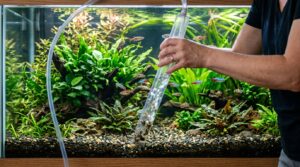
If cloudiness appeared immediately after adding water or shifting decorations, the culprit is fine mineral dust. Even pre-washed aquarium gravel and clay-based substrates like aqua soil release micro-fine dust particles that can remain suspended in water for days.
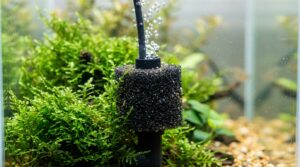
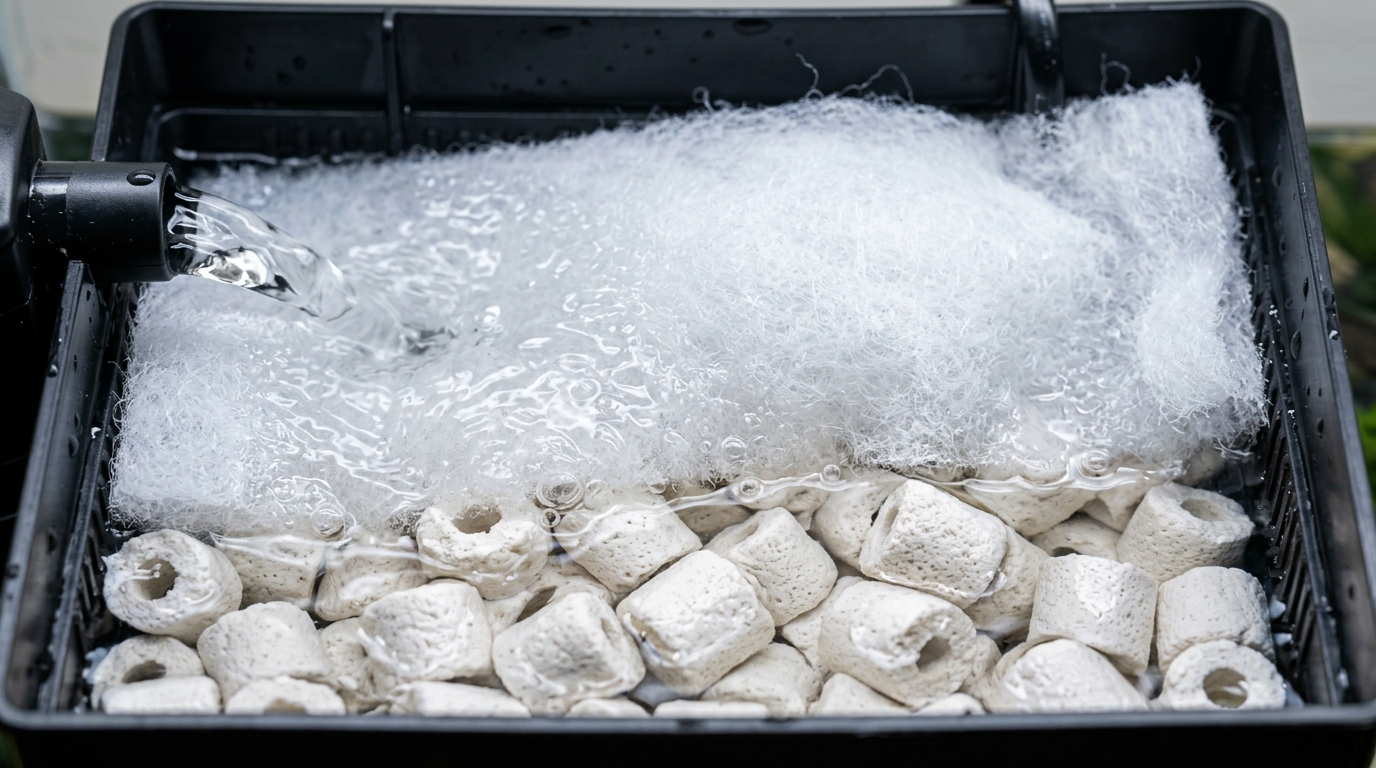
Standard coarse sponge filter pads often allow these microscopic particles to pass right through and circulate back into the tank. The simplest, most effective mechanical solution is adding a layer of fine polyfill filter floss into your filter chamber. Filter floss acts like a high-density micro-sieve, trapping tiny dust motes on their very first pass. Within 24 to 48 hours, the floss will turn dark from captured dust, leaving the aquarium water polished and transparent.
| Visual Appearance | Underlying Cause | Recommended Action | Expected Time to Clear |
|---|---|---|---|
| Milky White / Gray | Bacterial bloom (heterotrophic bacteria) | Reduce feeding, increase surface aeration, be patient | 3 to 7 days naturally |
| Fine Brown Dust | Substrate dust or stirred gravel | Install fine polyfill filter floss in filter box | 24 to 48 hours |
| Pea-Soup Green | Single-celled free-floating algae bloom | Reduce light to 6 hrs, block sunlight, or 3-day blackout | 4 to 7 days |
| Yellow / Tea Tint | Natural wood tannins leaching into water | Add activated carbon to filter or perform partial water changes | Gradual over 2 weeks |
Tackling Green Water Naturally Through Lighting Control
Green cloudiness is distinctly different from bacterial blooms. It occurs when microscopic suspended algae cells multiply due to an imbalance between light and nutrients. Standard mechanical filter sponges cannot catch individual single-celled algae.
To eliminate green water naturally, address the underlying cause: excessive light. Reduce your daily aquarium lighting schedule to 6 hours per day using an inexpensive digital timer. Ensure the aquarium is not positioned near a window where direct outdoor sunlight strikes the glass. In persistent cases, performing a total 3-day “blackout”—turning off tank lights and covering the tank with a dark sheet while continuing aeration—starves the algae cells of light, causing them to collapse and leaving the water clear.
Safe Step-by-Step Fixes for Clear Aquarium Water
When asking why is my aquarium water cloudy and how to fix it, the best course of action is methodical patience. Follow these gentle steps to restore sparkling clarity:
- Step 1: Test Your Water Parameters: Use a liquid drop kit to verify ammonia and nitrite read 0 ppm. If ammonia is present, perform an immediate 25% water change with dechlorinator.
- Step 2: Increase Aeration: Bacterial blooms consume oxygen rapidly. Angle your filter return toward the water surface or add an air stone to keep dissolved oxygen levels high.
- Step 3: Cut Back on Feeding: Reduce feeding to once every other day for four days. This sharply curtails the organic fuel feeding the bacterial bloom.
- Step 4: Do Not Perform Massive Water Changes for Bacterial Blooms: Changing 70% or 80% of the water during a bacterial bloom actually backfires—it introduces fresh nutrients that cause a fresh bloom 24 hours later. Let the bloom cycle through naturally.
- Step 5: Add or Replace Fine Filter Floss: Insert fresh polishing floss into your filter to capture decaying bacterial debris as the bloom subsides.
Common Mistakes That Prolong Water Cloudiness
Well-meaning aquarium owners often take impulsive actions that prolong the very cloudiness they are trying to eliminate:
- Dosing chemical “water clarifiers”: Liquid clarifiers work by clumping particles together using coagulants. They add unnecessary chemicals, can coat delicate fish gills, and do not resolve the root cause of biological blooms.
- Deep cleaning or replacing all filter sponges: Tossing out dirty filter media destroys established beneficial bacteria, sending the biological cycle backward and restarting the bacterial bloom.
- Excessive feeding during a bloom: Tossing in extra food because you are worried about fish visibility fuels the bloom further.
- Leaving tank lights on for 14 hours: Excess light promotes algae growth and stresses fish already coping with hazy conditions.
Frequently Asked Questions (FAQ)
Is cloudy white water dangerous to my fish?
The bacteria themselves do not harm fish. However, rapidly reproducing bacteria consume dissolved oxygen. As long as you maintain vigorous surface agitation or an air stone, your fish will remain completely safe.
Should I use chemical water clarifiers from the pet store?
We strongly recommend against chemical clarifiers. They use coagulants to clump particles, which can coat fish gills and do not address the biological root cause. Natural patience and filter floss are far safer and permanent.
How can I prevent cloudy water in a newly cycled tank?
Rinse substrate thoroughly before adding water, introduce fish slowly over several weeks, and follow a strict feeding schedule. Check our guide on how to cycle a new aquarium step by step.
Conclusion
Understanding why is my aquarium water cloudy and how to fix it transforms what feels like a crisis into a manageable, natural biological phase. In nearly every instance, cloudy water in a newly established tank resolves itself within five to seven days once feeding is moderated, aeration is maintained, and biological balance is established. By resisting the urge to reach for chemical quick fixes and letting nature do its work, you will be rewarded with long-lasting, crystal-clear water and healthy, thriving fish.
Recommended Related Guides & Resources:
Continue building your freshwater fishkeeping knowledge with our related walkthroughs:
- Explore our comprehensive guide on natural aquarium algae control methods.
- Check out our essential walkthrough on peaceful community fish combinations.
Educational reference: Consult official aquatic bacterial bloom dynamics for deeper biological background.


