





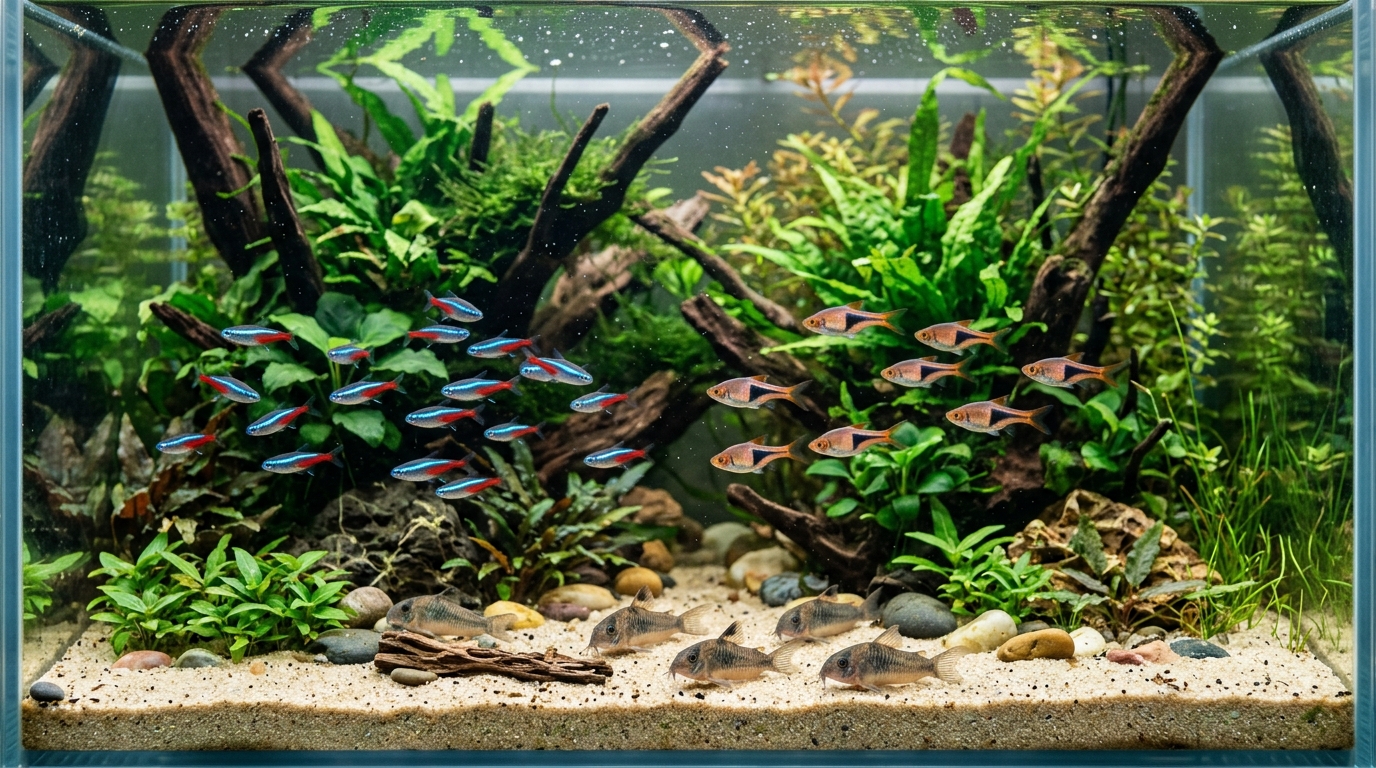
Selecting the best community fish that live peacefully together is one of the most exciting milestones in freshwater fishkeeping. A harmonious community tank is a captivating living portrait, featuring colorful schooling fish gliding through the midwater, graceful surface dwellers, and diligent bottom foragers sifting the sand. However, successfully combining multiple species requires more than simply choosing fish that look appealing. You must match water temperature preferences, dietary needs, swimming layers, and social temperaments. In this guide, we review the calmest beginner-friendly species, explain how to balance aquarium swimming zones, and share practical stocking strategies for a stress-free community setup.
Key Takeaways for Peaceful Community Aquariums
- Zone Distribution: Distribute species across top, middle, and bottom levels to prevent territorial crowding.
- Strength in Numbers: Schooling tetras and rasboras require groups of 6 or more to feel secure and prevent defensive fin-nipping.
- Gentle Bottom Cleaners: Corydoras catfish and small nerite snails make ideal tankmates that never bother other species.
- Visual Breakpoints: Live plants and driftwood establish natural boundaries so shy fish can retreat and rest comfortably.
The Three Golden Rules of a Peaceful Community Aquarium
To avoid territorial squabbles and chronic stress, successful aquarists adhere to three fundamental stocking principles:
- 1. Match Environmental Requirements: Never mix cool-water fish with tropical species that require heated water. All tankmates must share compatible temperature ranges (typically 74°F–78°F) and moderate pH levels (6.8–7.5).
- 2. Balance the Three Swimming Levels: Fish naturally occupy different vertical strata: top surface dwellers (hatchetfish, small gouramis), midwater schoolers (tetras, rasboras), and bottom foragers (corydoras, kuhli loaches). Spreading your livestock across all three zones maximizes swimming freedom.
- 3. Respect Mouth Sizing: Fish are opportunistic feeders. Even normally peaceful fish will swallow anything small enough to fit inside their mouths. Avoid pairing large omnivores with tiny nano shrimp or newborn fry.
Top Peaceful Species by Swimming Zone
Here are the most reliable, gentle freshwater species categorized by their natural swimming habits:
| Species Name | Tank Level | Minimum Tank Size | Ideal Group Size | Temperament |
|---|---|---|---|---|
| Neon Tetra (P. innesi) | Midwater | 10 Gallons | 6 to 10+ | Completely Peaceful |
| Harlequin Rasbora | Mid-to-Upper | 10 Gallons | 6 to 8+ | Calm, Tight Schooler |
| Corydoras Catfish (Bronze/Panda) | Bottom | 15 Gallons | 5 to 6+ | Gentle Social Scavenger |
| Honey Gourami | Top & Midwater | 15 Gallons | Single or Pair | Placid Centerpiece |
| Otocinclus Catfish | Glass & Plants | 15 Gallons | 4 to 6+ | Harmless Algae Grazer |
Midwater Marvels: Neon Tetras & Harlequin Rasboras
Small characins and cyprinids make the ultimate midwater community additions. Neon Tetras display vibrant iridescent blue and crimson stripes that shimmer against dark backgrounds, while Harlequin Rasboras showcase rich coppery-orange tones and distinctive black triangular wedges. Both species swim in unified patterns and show zero interest in bothering other tank occupants. Explore more beginner-friendly species in our guide on the best fish for beginners that are easy to keep.
Bottom Harmonizers: Corydoras Catfish
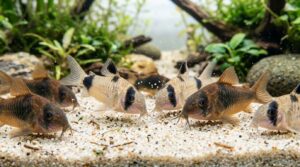
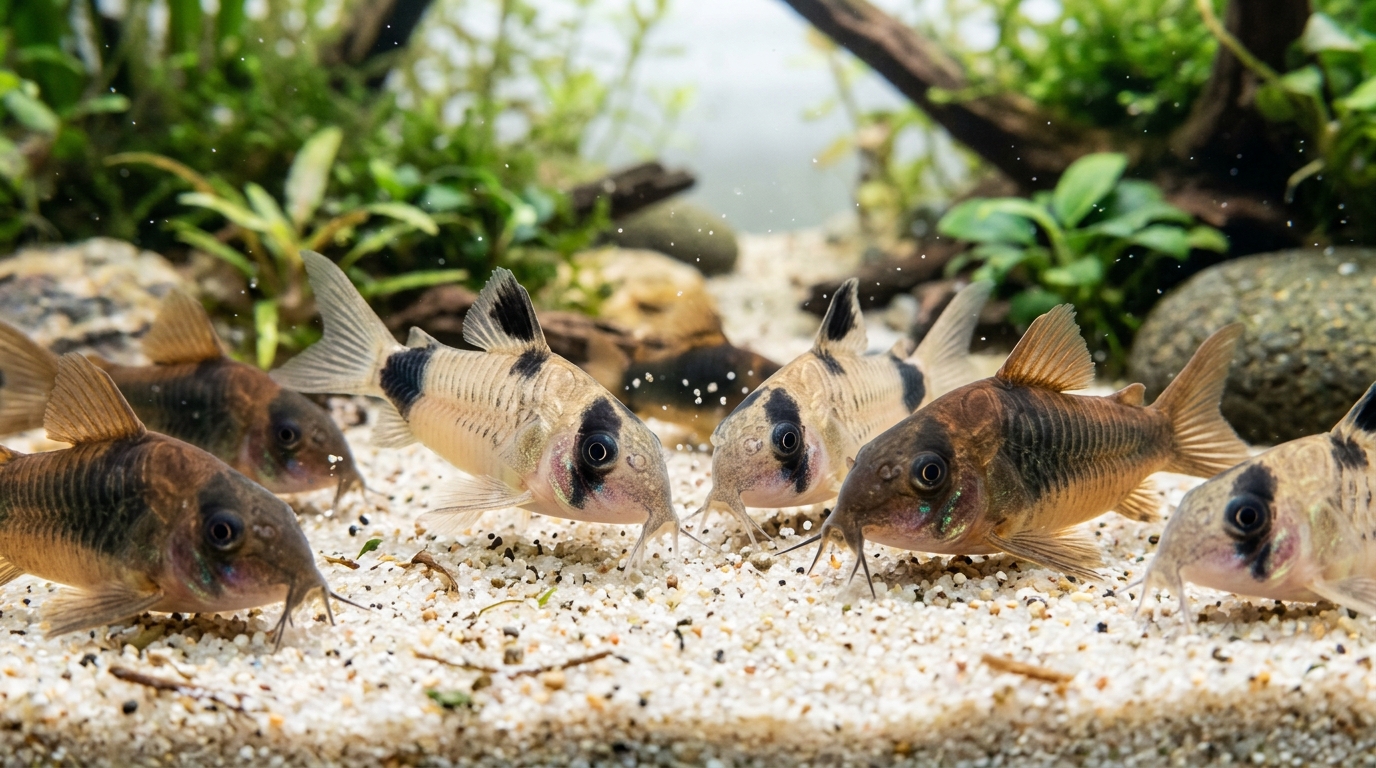
No peaceful community tank is complete without a small group of Corydoras catfish. These armored bottom dwellers constantly wiggle along the substrate, sifting through fine sand with sensitive whiskered barbels in search of micro-pellets. Because they are completely unaggressive, they live in perfect harmony with schooling fish, dwarf shrimp, and peaceful top dwellers.

Schooling Dynamics: Why Group Size Dictates Behavior
One of the most common surprises for beginner fishkeepers is discovering that an otherwise peaceful species can turn nippy when kept in isolation. Small schooling fish rely on the collective safety of the group. In the wild, numbers provide camouflage against predators.
When you purchase only two or three tetras or barbs, they experience chronic insecurity. Out of fear and defensive instincts, isolated individuals may harass slower tankmates. Keeping them in a proper school of at least 6 to 8 members redistributes natural social hierarchy within the school, leaving other species entirely alone.
Aquascaping for Harmony: Designing Safe Zones
The physical arrangement of your aquarium plays an equally vital role in keeping community fish calm and cooperative. Even peaceful fish appreciate private alcoves where they can retreat during feeding or rest:
- Plant Dense Perimeters: Tall background plants such as Java Fern and Amazon Swords create natural green curtains along the rear and side glass, providing immediate security.
- Provide Hollow Driftwood: Smooth spider wood and mopani wood roots offer archways where bottom dwellers like Corydoras can nap out of direct overhead lighting.
- Keep an Open Swimming Corridor: Ensure the front third of the tank remains clear of dense stems so schooling fish can glide across unobstructed.
- Soft Sand for Bottom Feeders: Use smooth, rounded river sand instead of sharp gravel to protect delicate catfish barbels from abrasions.
For detailed step-by-step planting ideas, visit our walkthrough on how to set up a planted aquarium for beginners.
Common Beginner Community Tank Mistakes to Avoid
- Overstocking Too Rapidly: Adding dozens of fish simultaneously overwhelms your biological filter and triggers toxic ammonia surges. Add new species gradually over several weeks.
- Adding Fin-Nippers with Flowing Fins: Avoid pairing notorious fin-nipping species (such as Tiger Barbs or Serpae Tetras) with slow-moving fish like fancy guppies or bettas.
- Underfeeding Bottom Dwellers: Floating flakes are often consumed entirely by surface and midwater fish before reaching the substrate. Always drop sinking catfish wafers specifically for bottom foragers.
- Skipping Acclimation: Sudden shifts in water temperature or pH between the store bag and your aquarium can shock sensitive fish. Take 20 to 30 minutes to float bags and gradually blend tank water.
Frequently Asked Questions
Can Betta fish live in a community aquarium?
Yes, but with careful tankmate selection. Male bettas can live peacefully in established tanks of 15 gallons or larger when paired with calm, short-finned bottom dwellers (like Corydoras) or non-aggressive nano rasboras. Never house bettas with brightly colored fin-nippers. Read our complete betta fish care guide for beginners for setup advice.
How many fish can live in a 20-gallon community tank?
A balanced 20-gallon long aquarium can comfortably accommodate a school of 8 to 10 small tetras or rasboras, a group of 6 pygmy or panda corydoras, and 1 peaceful centerpiece fish (like a Honey Gourami), provided filtration is steady and water changes are maintained weekly.
What should I do if one fish becomes aggressive?
First, verify that your schooling fish are kept in adequate group sizes. Adding two or three more of the same species often calms social tension. Second, rearrange hardscape and plants slightly to break established territories. If bullying persists, temporarily separate the individual in a breeder box or relocate them to another tank.
Conclusion
Building a tank around the best community fish that live peacefully together transforms aquarium keeping into a serene, rewarding daily experience. By respecting individual swimming layers, providing spacious schools of six or more, and creating lush natural hiding areas, you create an underwater community where every resident lives comfortably side by side.
Recommended Related Guides & Resources:
Continue building your freshwater fishkeeping knowledge with our related walkthroughs:
- Explore our comprehensive guide on how to clean a fish tank safely.
- Check out our essential walkthrough on fish appetite and health diagnosis.
Educational reference: Consult official freshwater community aquarium ecosystems for deeper biological background.


