





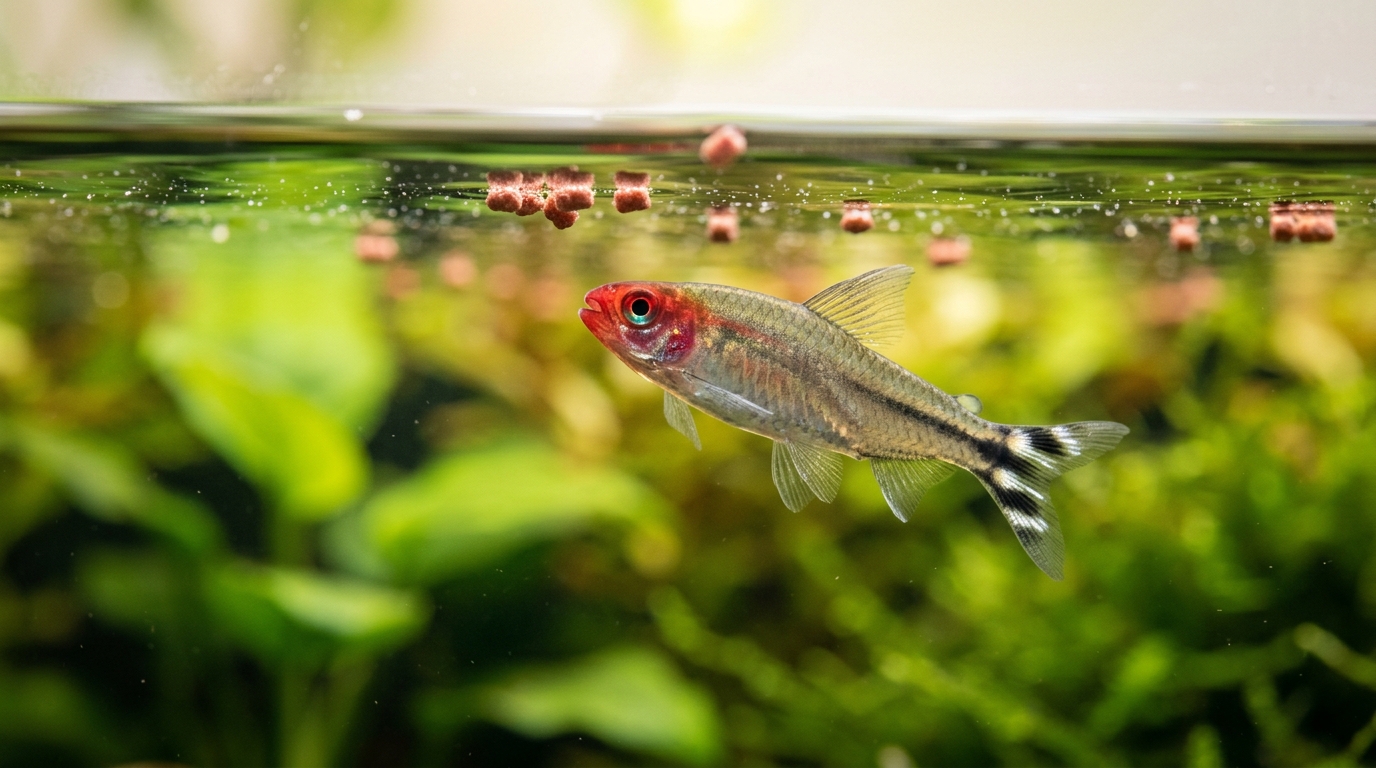
Few things create more worry for an aquarium hobbyist than approaching the glass with a pinch of food, only to watch a fish ignore the meal completely or swim away into the plants. When you are new to the hobby, seeing your aquatic pets refuse to eat can feel alarming. However, fish appetite fluctuations are very common and often stem from simple environmental or behavioral factors that you can easily identify and address. In this practical guide, we will explore why is my fish not eating common reasons explained, helping you understand how fish perceive their habitat, what environmental cues influence their feeding behavior, and how you can gently encourage them back to a steady daily routine.
- Relocation Stress and New Tank Acclimation
- Water Parameter Shifts and Temperature Sensitivity
- Food Type, Pellet Size, and Dietary Preferences
- Social Hierarchy and Tank Bullying
- Practical Steps to Encourage a Hesitant Fish to Eat
- Common Beginner Mistakes When Dealing with a Fish That Won’t Eat
- Frequently Asked Questions (FAQ)
- Conclusion
Key Takeaways & Quick Reference
- Normal Adjustment: Newly introduced fish often take 24 to 72 hours to settle before feeling safe enough to feed.
- Temperature Check: Tropical fish need stable water between 75°F and 79°F; cool water slows their metabolism dramatically.
- Pellet Sizing: Small species like Neon Tetras cannot swallow dense, oversized pellets; crush flakes or choose 0.5 mm micro pellets.
- Water Parameters: Test ammonia and nitrite immediately; even mild waste spikes cause lethargy and appetite loss.
Relocation Stress and New Tank Acclimation
The single most frequent reason a newly acquired fish refuses food during the first few days is relocation stress. Consider what a fish experiences before reaching your home aquarium: it is caught with a net at the store, placed in a plastic bag with limited water volume, transported through changing temperatures, and finally released into a completely unfamiliar aquatic territory with different light levels, water flow, and tank decorations.
When placed into an unfamiliar environment, a fish’s natural survival instinct is caution rather than hunger. In the wild, eating leaves a fish vulnerable to potential predators. Most freshwater fish need between 24 and 72 hours to map their new surroundings, find comfortable hiding spots among live plants or driftwood, and realize that no threats exist. During this initial adjustment period, it is completely normal for a fish to ignore floating flakes or pellets.
Here are gentle ways to ease relocation stress for new fish:
- Keep tank lights dim or turned off: Soft lighting reduces perceived threats and helps new arrivals relax during their first 24 to 48 hours.
- Minimize foot traffic around the glass: Avoid sudden movements, tapping on the glass, or lingering closely above the water surface.
- Provide plenty of cover: Dense foliage, floating plants, and natural rock caves give nervous fish secure resting areas where they feel protected.
- Do not force feeding on day one: Give your new fish a calm evening to settle in before introducing their very first small pinch of food.
Water Parameter Shifts and Temperature Sensitivity
Because fish are cold-blooded creatures completely surrounded by their aquatic medium, their metabolism and digestive systems are directly governed by water parameters. If you have been asking why is my fish not eating common reasons explained, testing your water quality should always be your immediate first step. Sudden shifts in water temperature, pH, or trace waste levels will suppress appetite almost instantaneously.
Temperature plays a massive role in fish vitality. Tropical species such as Bettas, Guppies, and Tetras require stable temperatures between 75°F and 79°F (24°C to 26°C). If an aquarium heater fails or room temperatures drop significantly overnight, the water cools down, causing the fish’s metabolism to slow dramatically. In cool water, fish process nutrients very sluggishly and naturally stop seeking food.
Similarly, undetectable buildup of biological waste products like ammonia or nitrite can cause discomfort that stops fish from feeding. Even low levels of ammonia irritate delicate gill tissues, making the fish feel lethargic and uninterested in meals. Performing a reliable liquid water test immediately reveals whether invisible water parameter shifts are responsible for the lack of appetite.

Food Type, Pellet Size, and Dietary Preferences
Not all fish eat the same types of food, and understanding anatomical feeding styles is essential for maintaining healthy appetites. Different freshwater species feed at distinct water levels based on the position of their mouths:
- Surface Feeders (Upward-facing mouths): Species like Guppies, Hatchetfish, and Bettas prefer floating foods such as light flakes, insect crisps, or buoyant micro pellets.
- Mid-Water Swimmers (Terminal mouths): Tetras, Rasboras, and Barbs naturally snatch food as it drifts gently through the middle water column and may completely ignore food resting on the substrate.
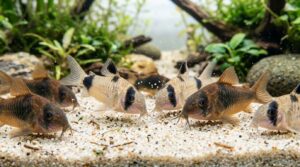
- Bottom Dwellers (Downward-facing mouths): Corydoras catfish, Loaches, and Otocinclus require sinking wafers or pellets that descend directly to the tank floor, where their barbels can locate nutrition.
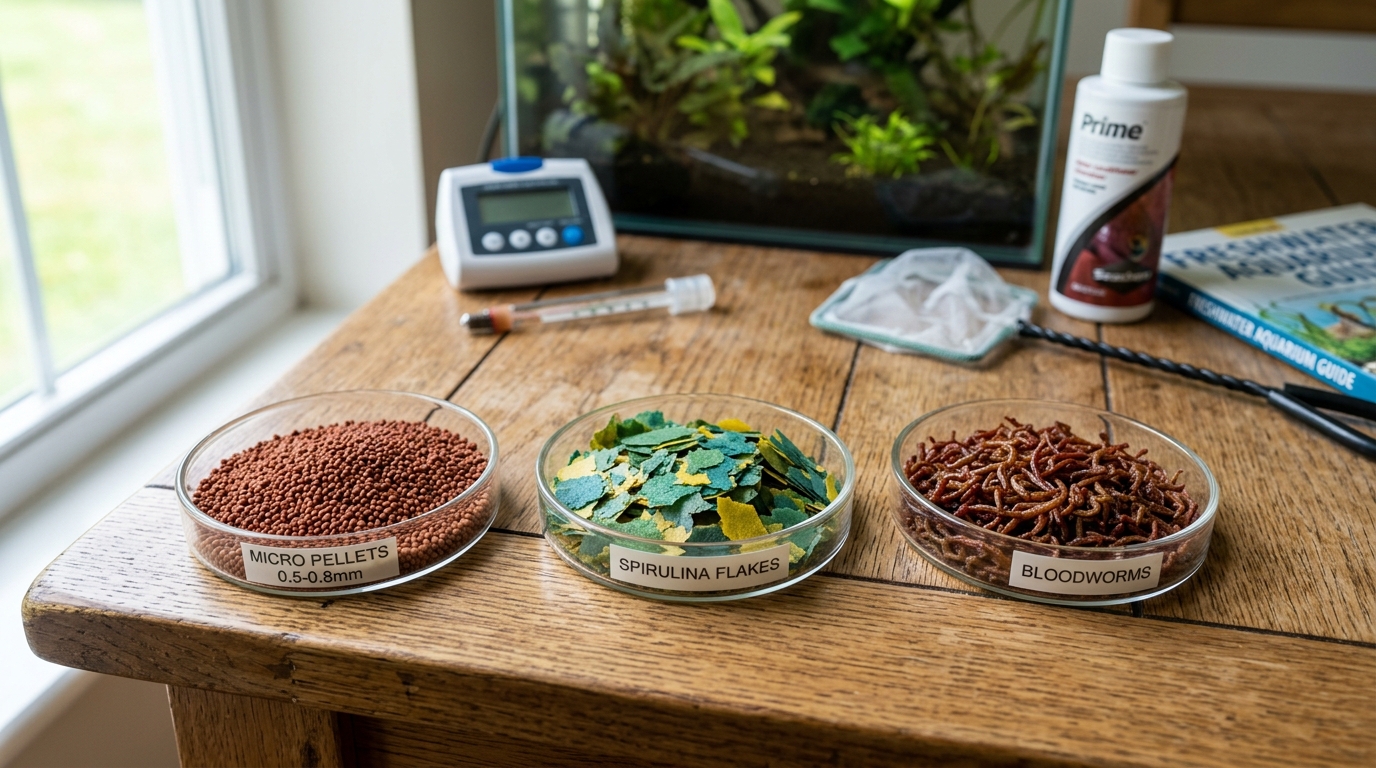
Pellet size is another common yet overlooked issue. Small nano fish like Neon Tetras or Chili Rasboras have surprisingly tiny mouths. If a pellet or flake fragment is too dense or large for them to swallow comfortably, they may peck at it once, spit it out, and swim away frustrated. Pre-crushing flakes between your fingers or choosing 0.5 mm micro pellets often resolves the issue instantly.
Social Hierarchy and Tank Bullying
In community aquariums, social interactions between tankmates play a significant role at feeding time. Fast, boisterous swimmers like large Danios or active Barbs often rush toward the surface and consume all floating food within thirty seconds, leaving shy or slower species without a chance to feed.
If a particular fish feels intimidated by a dominant tankmate, it will remain tucked away in the back corners or behind decorations while food is present. To ensure every inhabitant receives adequate nutrition, hobbyists can scatter food simultaneously at opposite ends of the aquarium. This simple technique distracts active swimmers on one side while providing shy fish a calm, uncrowded area to eat peacefully.
| Observed Behavior | Most Probable Cause | Recommended Solution |
|---|---|---|
| Fish spits out pellet repeatedly | Food is too large or too hard | Switch to 0.5mm micro pellets or soak flakes in tank water first. |
| New fish hides in plants at feeding time | Acclimation / relocation stress | Keep aquarium lights off for 24 hours and avoid sudden room movements. |
| Fish hovers near heater lethargically | Water temperature is too low | Verify heater operation with a digital thermometer; aim for 76°-78°F. |
| Shy fish chased away by active tankmates | Competition from boisterous species | Feed simultaneously at opposite ends of the aquarium to disperse crowd. |
Practical Steps to Encourage a Hesitant Fish to Eat
If you have verified that your water parameters are pristine and your heater is functioning properly, here are proven, gentle steps to stimulate a hesitant fish’s appetite:
- Try Garlic-Enriched Foods: Natural garlic extract is a well-known natural appetite stimulant for freshwater fish. Soaking pellets in a drop of aquarium-safe garlic juice enhances aroma and attracts reluctant eaters.
- Offer Frozen or Freeze-Dried Treats: High-protein items such as frozen daphnia, baby brine shrimp, or freeze-dried bloodworms trigger natural predatory instincts and are rarely refused by finicky fish.
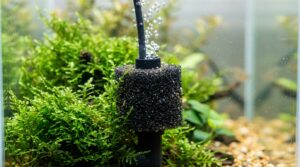
- Adjust Water Flow During Feeding: High filter currents can blow light flakes away before timid fish can target them. Briefly slowing filter flow or turning it off for three minutes allows fish to feed in calm water.
- Feed at the Same Time Daily: Fish quickly recognize daily feeding routines. Maintaining a consistent morning or evening schedule builds anticipation and confidence.
Common Beginner Mistakes When Dealing with a Fish That Won’t Eat
When trying to resolve why is my fish not eating common reasons explained, well-meaning hobbyists often take actions that unintentionally worsen the situation. Avoiding these common mistakes will keep your aquarium balanced and healthy:
- Adding excessive food repeatedly: Pouring more and more food into the tank in hopes the fish will eventually eat only causes uneaten waste to rot, fouling the water and creating dangerous ammonia spikes.
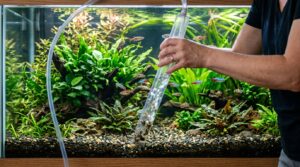
- Leaving uneaten food in the tank: Any food not consumed within three to five minutes should always be netted out or siphoned away promptly.
- Changing water parameters drastically in panic: Performing massive 80% water changes or radically shifting water temperature adds severe physiological stress to an already nervous fish.
- Tapping on the aquarium glass to get attention: Tapping sends loud acoustic shockwaves through the water, frightening the fish and driving them further into hiding.
Frequently Asked Questions (FAQ)
How long can a healthy freshwater fish survive without eating?
Most healthy adult freshwater fish can easily survive 5 to 7 days without food without any adverse effects. It is far better to fast a hesitant fish for a day than to repeatedly dump uneaten food into the water, which causes dangerous ammonia spikes.
What is the fastest way to entice a stubborn fish to eat?
Soaking micro pellets in a drop of pure aquarium-safe garlic juice or offering thawed frozen brine shrimp or daphnia triggers intense predatory feeding instincts that few freshwater fish can resist.
Should I remove uneaten food from the aquarium?
Yes, absolutely. Any food not consumed within three minutes begins breaking down into organic waste. Use a soft net or siphon tube to lift uneaten flakes promptly.
Conclusion
Seeing your aquatic companions ignore a meal can feel discouraging, but patience and careful observation are your best tools. In the majority of cases, hesitant feeding is simply a temporary reaction to moving into a new home, a need for slightly different food sizes, or mild water temperature variations. By checking your water parameters, offering species-appropriate food sizes, and providing a peaceful, planted environment, you will help your fish regain their natural curiosity and healthy appetite in no time.
Recommended Related Guides & Resources:
Continue building your freshwater fishkeeping knowledge with our related walkthroughs:
- Explore our comprehensive guide on best low-tech aquarium plants.
- Check out our essential walkthrough on filter options for small fish tanks.
Educational reference: Consult official fish physiology and foraging behavior for deeper biological background.


